Duncan, Ashley and Jamie
DUNCAN INTERVIEW
12/11/2017 EDIT
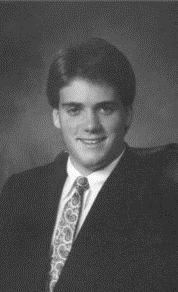
KAY: We lost Jamie in 1992. He was 20 years old. He was a sophomore at Lipscomb University. He was a very outgoing sweet little boy. He had beautiful blue eyes.
INTERVIEWER: Tell me a little bit about when he was born, of the year and date.
KAY: He was born in August, August the 27th, 1971. Yes, 1971, you remember! (laughs) At one time we had been told we couldn't have children so for him to be born was quite a blessing.
INTERVIEWER: You tell me as a child he had a sweet disposition.
KAY: Very sweet, yes. Like I said, very outgoing. I don't think he or Ashley either one ever met a stranger.
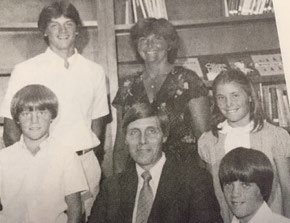
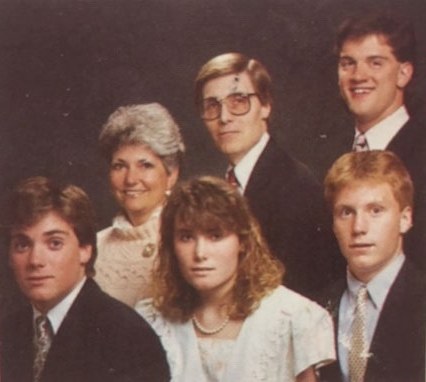
MIKE: Right. So we rounded out a family of six. But I guess the thing I most remember about Jamie was that he was very affectionate. He was very affectionate with me and Kay. He loved family. We had an extended family and we had Thanksgiving dinners and Christmas get-togethers, so he loved all his cousins, and, of course, they loved him. One thing I remember particularly about his high school years was that he had such a good group of kids at Lipscomb High School that he ran around with, both boys and girls, and they were very close to each other and very just good together, spent a lot of time together. And after Jamie had passed away, they came out and planted a tree at our house, some of them did, in his honor.
INTERVIEWER: Can you tell me how old he was when he passed?
KAY: He was 20. And that was on June the 13th of 1992. He would've been 21 in August.
MIKE: He had been dating a young lady that was also in school at Lipscomb University. And they were quite close and would've made a good couple.
INTERVIEWER: Okay. Tell us about Jamie.
KAY: (laughing) You know, he wasn't shy ... particularly as he get on up in high school, you think they're gonna duck and run when the parents show up. But he didn't. He was always there with a big hug and just very welcoming. He was a very good son.
INTERVIEWER: So it sounds like he stayed close, because like you said, usually as they mature.
KAY: Kind of push you away, yes.
MIKE: No, he was very glad for us to meet his friends and be with a larger group of people.
KAY: Most of the friends that were in his high school, that were in his class, they also went on to the University and kind of did that as a group, so they were just a good bunch of kids, and just seemed to bond well.
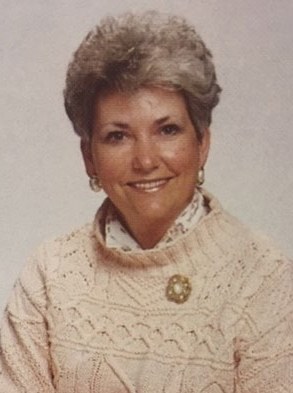
MIKE: Kay has several brothers and sisters so he had a lot of cousins, and every year for, I guess we did it for about 25 years, we'd go to Gulf Shores as an extended family. So that was always a good time with their cousins and they did all the things that young kids would do on a beach, so it was a good time. That plus as I already mentioned the holidays were always good.
INTERVIEWER: What were some highlights with Jamie that particularly come to mind over those 20 years, just events or things he did, or anything? Things that stand out.
KAY: Right. He and Mike would do the Pinewood Derby, which is a Cub Scout thing. (laughing) And, they seemed to enjoy that. I think, didn't one of his cars get second place, or something?
MIKE: He did well one year. One year I made some last minute adjustments that slowed our car down quite a bit. (laughing) And I really felt quite bad about that, but he accepted it quite well, and he liked the outdoors. We'd do some hunting and fishing and things like that.
INTERVIEWER: Are there any highlights that stand out for you? Anything particular?
KAY: He ran cross country in high school. He said that was about the only sport his older brother didn't do (laughing) that he felt like he could do, and he did well. He had this little Isuzu pickup truck, and they would put all the water and Gatorade and all that on the back of his truck, so it was kind of like his little truck was the mascot. They would, later, do photos, and VHS movies of the classes about that time, and his little truck was in all of the cross country photos. Usually, right out in the center. He enjoyed that. And several of his friends ran cross country too.
INTERVIEWER: Is this in high school or college?
KAY: In high school. He didn't do any sports activities in college. He didn't play football when he was a freshman, he was so small. His little arms weren't very big at all, so we decided it probably wouldn't be a good idea to play football. And usually if you didn't play your freshman year, it was really hard to come out and play after that. And so on Friday afternoons, the boys who didn't play would be down scrimmaging and whatever, and this particular afternoon, we were waiting, and Jonathan, who is his younger brother was practicing, or playing or getting ready for a game. No, I think Jonathan was a freshman at that time, so he wasn't playing. He might've been a senior that year.
He and another boy hit head-on while they were doing their scrimmage thing, and he got a concussion, he didn't think that he had a concussion ... but he kept repeating things. Jonathan drove Jamie’s truck and I followed him to the emergency room, cause we decided we might ought to get it checked out. And so it turns out that he did have a concussion, but what was so funny, kind of, about all this, was that he kept saying, or they would ask him what day of the week it was, and he kept getting it wrong, and he kept telling them that it couldn't be Friday, because he knew if it was Friday, he had a date, and he couldn't be there. (laughs) But as it turned out, he did have a date, but none of us knew who the girl was, or how to get in touch with her. But I think he spent the night in the hospital that night.
INTERVIEWER: And he recovered well?
KAY: Yes, he did.
INTERVIEWER: If they're scrimmaging, they're not wearing any protection?
KAY: Right. And he wasn't because he wasn't even on the team, it was just some boys just fooling around, and he got hit just a little bit too hard.
MIKE: Well, one of the things that was significant to me after he got to college. He started out at Lipscomb University, and we'd never talked much about what he wanted to do, what he wanted to study. Just leaving that pretty much to him. And I didn't know particularly what his interests were.
MIKE: His sophomore year, going into his junior year, he had decided that he would like to be a forest ranger. Or, work with the state or federal government, as far as being in the outdoors. And he had thought that he would go to UT Martin, which had a program for that.
KAY: Well, he had met and talked to several park rangers. The ones that worked over at Radnor Lake, and different ones, to find out where they had gone, and what would be the best place to go.
MIKE: Right. And I remember early that summer, somebody had come by the house. I don't know if it was a workman or somebody that was doing something for us outside. I specifically remember being outside and talking about his son and my son, and what Jamie was planning to do. And of course when someone dies suddenly like that, you go through all the what-ifs, you know. We were quite sure that he and his girlfriend were serious, would probably get married, would probably have children. He'd probably go to UT Martin. He'd probably be a Park Ranger and would probably love it, and it would be the ideal job for him. So you think about all those things. Going just a little bit into the events leading up to his death . He was at his girlfriends' house, and I think she lived with a family there, right close to the campus.
KAY: One of the coaches and his family.
MIKE: Yes, and anyway, he kind of overstayed his stay, and she had told him, that it'd be better for him to spend the night there, but for some reason, he felt like he needed to get home. So I think the accident ... Was it about 2:00 in the morning?
KAY: It was about three in the morning before the hospital got in touch with us.
MIKE: ... Yes, the accident occurred on I-65. Actually, it was probably about a mile north of Brentwood. A mile or two. They were doing some construction, so they didn't have the warning strips like they have now where they wake you up if you go off the side of the road, so he just went off the side of the road. But, anyway, you think about things. Well, how things happen, or why things happen, but obviously, if he'd spent the night there, it wouldn't have happened. But he did have a history, and his girlfriend verified this as well, he did have a history of falling asleep, at least one time. She knew about it. And I think we'd known about some of the other times, so, and we'd gotten him a new vehicle. A used new vehicle, and it had a cruise control on it, and we just envision that he set the cruise control, promptly went to sleep and sailed off the road.
KAY: And we had just gotten the car for him. In fact the little Isuzu P'up, was at the house. And he had just gotten this car. I guess we'd got it for him the week before. It was a Mustang.
MIKE: It did have cruise control, but did not have air bags back in the day. So you think about all the what-ifs and everything, but it's been a long time. I think of him really often. Not every day, but quite often. And, you know, we've reconciled to that. He's in a better place. But you just think about all the things that could've been, you know?
INTERVIEWER: Sure. Let me ask you, and if I ask you anything that you don't want to respond to, that's fine. But I'm curious how the ... cause y'all were at Otter Creek, and do you remember, I know it's been a while, but do you remember any of the response or reaction you may have received from the church, or from friends? From the school? I'm just curious how people tended to console or support you all. Let me ask you, and if I ask you anything that you don't want to respond to, that's fine. But I'm curious how the ... cause y'all were at Otter Creek, and do you remember, I know it's been a while, but do you remember any of the response or reaction you may have received from the church, or from friends? From the school? I'm just curious how people tended to console or support you all.
KAY: They were ... without that church family, I'm not sure we would've made it through.
MIKE: Well, the school was very supportive too.
KAY: Yes, they were.
MIKE: In fact, at his memorial service, tell me who all spoke again.
KAY: Richard Jones.
MIKE: Richard Jones who was the principal at that time of Lipscomb High School.
KAY: A couple of his teachers. I'm trying to remember.
MIKE: We had an overflow crowd. You remember the old Otter Creek building. The balcony and downstairs were full. And so it was a very meaningful service. And our ministers, who spoke? Was it Russ?
KAY: Yes, I think it was.
MIKE: Russ [crosstalk 00:19:00] spoke plus the principal of the high school, a couple of teachers. So it was a great outpouring of love. And it helped a lot.
KAY: Jerry Collins, I think.
MIKE: So I think part of that could be, some of it would've occurred naturally, but part of that could be because he was so plugged into the school, had so many friends there, and was a friendly outgoing person. I think he made an impact there.
INTERVIEWER: Sounds like it. How did, and again, if I say something and you all are uneasy about it, just not respond.
I imagine you kind of mentioned this a little bit earlier, I imagine something like that is hard. I think you used the word reconciled. It's hard to reconcile, I'd say with God, or just, like you said, the what-ifs, and then another question is, why? I didn't know if you all had, maybe still struggle with that. I know I do and my circumstance is not anything like yours.
MIKE: Well, it's tragic, and you and I have talked about that. Intellectually, you deal with it. You realize that death is a part of life, and it happens, and could happen to either one of us at any time. And I think it's maturing in faith, possibly. To recognize that life here is not ... it's important and it's valued, and we enjoy it certainly, but it's not the end of all things. Kay couldn't do it, or didn't want to do it, but I became pretty involved with The Compassionate Friends and went to a lot of meetings, and read a lot ... I just read, probably, 15 books about losing a child. So just sharing that grief with other people and working our way through it. And Kay had a different experience. She didn't, she was more private, and didn't like that group interactions idea. It was a great help to me.
KAY: It was not a great help for me. The first time, I guess the first year, after Jamie's death. We went to a Compassionate Friends meeting, which is for parents who have lost children. They would put a huge picture of them down front, and you would go down and light a candle. Well, to me that was like the funeral all over again, but it was helpful to Mike.
INTERVIEWER: ... what works for one person is unbearable for another.
MIKE: Yes, but, as much as all that is significant, the recovery or ... I don't think you ever recover. You get used to it, I guess.
KAY: Well, you just find a new normal, is what you do.
MIKE: But his life, the events of his life are more important, as far as memories are concerned. And he had a good life, a short life, and I think the quote is something like, it's not the quantity of life, but the quality of life that ultimately is important.
KAY: Yes, he always had a big smile on his face.
INTERVIEWER: Do you tend ... do your thoughts tend to gravitate to those positive moments now more?
KAY: Right.
MIKE: Certainly.
KAY: Yes.
INTERVIEWER: So, if you had to see ... I, of course, like I said, I am new to you all's story, but if you ... and I know you've done a little bit of this already, but if you had to give me a condensed or capsulized impression of Jamie, what would you ...?
Okay. What would you tell me? What would you say? I've always heard it referred to as the elevator talk.
MIKE: Just a loving, kind, affectionate, joyful life. And it was just a blessing and a joy to have him in our family.
KAY: Well, he was from the time he was born just a great little boy. I don't know if there's anything specifically I can put my finger on. He just was very sweet.
MIKE: Well, he was very communicative with us.
KAY: Yes. That's, when they, he could never tell you a lie, because his face was like an open-book. And you could tell right away if he wasn't telling you the truth about something.
MIKE: Very, very transparent. But, you know, as I said, I think about him often and just the blessing that he was. But part of his personality, a big part of his personality… we will talk about Ashley in just a minute. He was an extremely outgoing person.
It might be a good time to pivot on to Ashley.INTERVIEWER: Tell me about Ashley.
MIKE: Well, as Kay said, we'd been told that it'd be difficult to have children, and we were living in New York state at the time, close to Binghamton. We started thinking and talking about, adoption. Back then things were not as complex, I guess, as they are today. You didn't have to jump through as many hoops to adopt a child, so the process was quite easy. And pretty quick. Do you remember how long it was from the time we applied to? It wasn't long.
KAY: It wasn't long at all. I think it was maybe two months. From the time we applied until we had a child.
MIKE: Ashley came to us at three months, wasn't it?
KAY: Yes.
MIKE: He was born on September 11th, 1968, and he came to us at about three months age. He was the cutest little baby. He had a head full of hair. And being so far away, we didn't come home often. Kay and I both are from Hickman
County, and when we took him home for the first time, I guess, at Christmas. And everybody ... He was the first grandchild for Kay's parents.
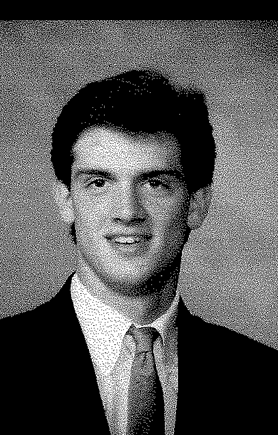
KAY: And for yours.
MIKE: And for my parents as well. So everybody just fell in love with him, all Kay's sisters and brothers and her parents.
KAY: I'm the oldest of seven children. (laughs)
MIKE: Just fell in love with him because he was a cute little baby. So there was a lot of great joy when he came along, and then of course, obviously, not very long after that, Jamie came along, so the spell was broken I guess. And after that, twins came along, so we were ... we decided when they start coming in twos, it's a good time to slow down. It was never an issue with his relationship and the other children. In fact, I don't ever recall us sitting down to talk with him, and say, well you're adopted and you're different. It was a non-issue. And there was a lot of in- born knowledge or sense or whatever. I think he had later on in life, I think he had some problems with that. Wondering who his parents were, and what the circumstances were. But from our standpoint, we didn't have any issues. We weren't curious about that, and we made a point to make sure that there was no indication from our part, that he was any different. But Ashley was a born salesman. He had the outgoing personality of Jamie, but more than that, he had the-
KAY: Charisma.
MIKE: ... Charisma or outward projection, in other words, to relate to people or people to relate to him. So he was very popular in grade school and high school as well.
KAY: And he was, even as a baby, when we'd go to church or whatever, it was like he attracted particularly other kids. And it was just amazing to watch. I mean, it was like he could do anything that he wanted to, you know. And you could just feel it. He just radiated that. And he was very athletic. And in later years I guess he played football and basketball. There was practically nothing he didn't try. He did the decathlon and track.
MIKE: He went on to play basketball with Belmont.
INTERVIEWER: He went on to play basketball?
MIKE: Basketball at Belmont under Coach Byrd. And he, the same way at Belmont, he was a leader, and pretty prominent on their basketball team. Cause that was when some of the best players came through. Joe Behling, Scott Corley, Scott Speedy and Casey Alexander, who now coaches Lipscomb University basketball. So it was a great group of guys. In fact, we had lunch with Scott Corley recently. He's the newly appointed Athletic Director at Belmont. He was recalling that the whole team would come out to our house for a big lasagna dinner, so that was courtesy of Kay. She did all that.
KAY: I told him the gist of the thing was I could cook more lasagna than they could eat. And I usually almost did that. (laughs)
MIKE: So we had some great teams and went to a lot of great basketball games. I might just mention as a side note. Julie played basketball. Jonathan played football, wrestling, track, and decathlon. Jamie as we mentioned did run cross country. At that time we had one of those custom vans. A big Chevy van. So there were many evenings we ... I guess we'd eat together in the van and that was our home away from home because we'd be at school a lot.
KAY: If we were at one of Ashley's games, the twins were probably in the van doing homework.
MIKE: Anyway, that was a great time coming through Lipscomb with them. But back to Ashley, and I don't know how much to get into this, but Ashley had some difficult things in his life as he got older. I think we probably shouldn't go into that in great detail, but the bottom line was that even though he had some problems, he was always affectionate to us. He was always affectionate, never disrespectful or never unkind to us. Even though he had problems, I don't think that was the essence of his life. I think the essence of his life was that he loved people and people loved him, and he was a good person. And even beyond high school, he would referee small kids' baseball.
KAY: Yes, there was a league that played behind Harpeth Hills church. And he was sort of the person who did the umpiring and he would get umpires for all the teams there. So when he was playing at Belmont, the players would come out on a Saturday morning, and they would all be out there umpiring the games.
MIKE: So, and he wasn't doing that for the money. It was small amount, I guess, but he just liked to nurture kids, and liked to help young kids come along.
KAY: And those little kids would come to some of his Belmont games with banners with his name on it. So that was fun.
MIKE: Yeah, that was fun. Course as I said, he went from Lipscomb High School to Belmont, and when Belmont would play Lipscomb, Kay probably remembers it better than I do, the students would ... like when he'd come to the Lipscomb gym, students would chant, what was it? They'd just call his name?
KAY: They would call his name. "Ash-ley! Ash-ley!" .
MIKE: They would chant his name like he was a traitor or something.
KAY: But I think he was the, and still is, from what they say, the only Lipscomb student to come from Lipscomb to play at Belmont.
INTERVIEWER: So he was singled out for that.
MIKE: Yes, students had a lot of fun with that. But that's the essence of his life. I would be remiss probably not to mention that he had some challenges later on in life, but the essence of his life was just a joyful, outgoing, kind and compassionate person. And even as I mentioned earlier, I'm sure at different points in time, he had questions about who his parents were, it never, that I could detect, was ever an issue between us and him. In his own mind, I'm sure he had challenges, but we never had any difficulty with it.
INTERVIEWER: Did he ever try or attempt to-
KAY: I had even offered if he ever wanted to, that I would go with him back to New York and we would try to find out. Because we had no idea.
INTERVIEWER: It wasn't then like it is now and people didn't know.
MIKE: Oh no, very different. You had no idea.
KAY: Right. All we knew was he was baby boy Berto, that was it.
MIKE: You weren't allowed to know. Or I guess it would've been very difficult to find out, at that time anyway.
INTERVIEWER: So when did he pass?
KAY: October the 6th, 2008.
INTERVIEWER: That hasn't been that long ago.
MIKE: Not, not that long ago.
KAY: And he never got over us losing Jamie. They were close. And he just never seemed to reconcile with that. And I think that was sort of the beginning of the end.
MIKE: But he did have a relationship ... I don't know what they call it, really, but he had a lady that he lived with and she's become a big part of our family. She lives in Florida, and he lived in Florida. I was just talking to her last night. But she's a big part of our family. And every time we have a big get together she always is invited to come up, and sometimes does come up. And we see her sometimes down in Florida also.
KAY: But not long after we lost Jamie, Ashley married. And they didn't live ... they just never really got along very well. They had a daughter. Last year in May, she married. She is a nurse working in Children's Hospital in Memphis. Her Mother did an excellent job with her and she's just a beautiful young lady.
INTERVIEWER: And so he was a Dad.
KAY: Yes, he was.
MIKE: And she obviously is a very important part of our family.
KAY: She looks just like him.
MIKE: I should've mentioned her. Adleye is her name. And she married Dean. They're a wonderful couple. We see her as often as we can. Her Mother's parents live in Nashville. So she's up here from time to time.
KAY: Yes, Allison was a Belmont student, too, as was her Mother.
INTERVIEWER: So, how old was Ashley when he passed?
MIKE: 40
KAY: Yes. He had just turned 40 in fact.
INTERVIEWER: And let me, again, you don't have to answer ... to me, there's ... it's unimaginable to lose one, but then to lose two. I'm just trying to get a feel for how you still ... and I guess you still are ... but how you dealt with that? How you handled that?
KAY: Very hard. Yes. With Jamie's accident, it was like one of those horrible things where you're called in the middle of the night, and by the time you get to the hospital ... We were called to Vanderbilt to the emergency room, and they had to cut him out of the car, so he probably was not alive when they called us. And then with Ashley, we were there at the hospital and I don't know which is harder, having that sudden pronouncement or death or being there and watching it happen. It's extremely difficult either way.
MIKE: Yes, a little backstory there. We had him flown from Florida to Vanderbilt, to the emergency room. So that's how he wound up at Vanderbilt.
KAY: He lived about a month.
MIKE: A month? Okay. Of course, they were doing everything they could. And I don't know, I ... it's hard to say what his mental state was then, what he was thinking. They did everything they could in cooperation with him.
INTERVIEWER: Was he aware that you all were there?
KAY: Yes.
MIKE: Yes, I think to the very end. Even after he lost consciousness, they told us one of the last senses that people lose is hearing, so we were fairly confident he could hear us, but couldn't respond. But I would go to the Compassionate Friends meeting back in the day and we obviously talked about how to deal with the death of a child, and I think there was at least one lady who had lost two children, and I was thinking at the time, I just don't know how I could do that. That seems so hard. But I guess somewhere along the line, I got the foreboding sense that it probably was gonna happen to us at some point in time, but it didn't make it any easier. And you know, the purpose of this, to do this for Sandra, was not to dwell on their death, but of course that's a big part of it, but to try to say something positive or encouraging about their life. And that's really more how I dwell now most of the time. Is thinking about, not trying to relive those horrible last moments, but try to honor the life. And the joy of the life.
INTERVIEWER: During this time when Ashley and Jamie were both growing up, were y'all attending Otter Creek?
MIKE: Yes, when we first came back to Nashville in ... Just a little bit of backstory, we married in Hickman County where we both grew up. We lived in Nashville for about two and a half years. We left in ‘67, and then three different places, and came back in ‘79, and we tried a couple, maybe visited three or four churches, and settled on Otter Creek pretty quickly.
INTERVIEWER: Why?
KAY: Cause our kids were tired of visiting churches. They liked Otter Creek. (laughing)
MIKE: But more practically, at that point in time in my spiritual life, and I guess Kay's, too. We were looking for a more open and accepting congregation and I guess Otter Creek was that. Wasn't as judgmental, maybe.
INTERVIEWER: That had to be true. And was that nurturing for the children, you feel like?
MIKE: I think so. Of course, we think about this from time to time. You just can't compare Otter Creek now to then. Because the youth program at Otter Creek is so vibrant and so powerful for the kids coming through. Back then, we had assistant youth ministers and they did good, they did the best they could. So the kids had a good experience, but just not comparable to the experience kids have now. A little bit envious of that. Would've been nice to have had all that.
KAY: Yes.
INTERVIEWER: I just asked that because that was our experience that we loved the atmosphere, the people. The way they treated the young people, as our kids were there. Anyway, this is not about me, but that's why I asked that.
MIKE: Yes, it's similar for us.
KAY: The church had family retreats and different things, they were more into that with those families. The other families who went on those kind of things, it seems like there was a lot of bonding that went on. Although they might not have had quite all the activities they would've had with a regular youth minister, it wasn't so bad.
MIKE: It wasn't bad at all. It was good. I'm just saying, it's so much different now.
INTERVIEWER: Let me just ask a couple more questions, then I'll let you go unless you want to say something else, but when ... Your journey ... How's that, from a positive standpoint, are you able to empathize more, or minister more to people who've had such loss? I didn't ... I just didn't know if it's moved you into that kind of role where you're able, or at least you can empathize more, even if you don't know what to say.
MIKE: Yes, I think so. I think just being present when you can. Of course what I'm experiencing now at Otter Creek, there's so many people whose parents pass away or brothers and sisters, and I have no idea who they are. But any time that somebody that we know has a loss, I try to remember it in some way. At least a card. But I think more than having been there, I think it's just understanding the situation better, and knowing that presence and caring is much more
important than any words you might say. Because there really are no words that can make people feel better. So I understand that. That's an understanding that's helpful in a lot of situations.
INTERVIEWER: Is there anything y'all want to say that you haven't said? Do you have anything to share?
MIKE: No, I guess to summarize a little bit. We wouldn't have gone to this lengths, I guess, without Sandra, but I really appreciate what she's doing. Sandra has a wonderful feel for people and the history and traditions at Otter Creek. I'm really proud that she's taken on this challenge. So when she asked me to give some thoughts on Jamie and Ashley, this goes back several months now, I just couldn't think of any way to ... course I did send her the obituary so she could get the basic facts down. But I couldn't think of any way to write down memories or memorials, so as the months went by and I'd put it off and put it off, it finally occurred to me, this is the only way we could do it. We can send her something that's meaningful. What would you say, Kay?
KAY: Well, probably, pretty much the same, I think.
MIKE: Well, it's just two good lives that we were able to be a part of for a period of time, and you've probably heard something like this, when you have a great loss, you don't get over it, you don't get past it. I think of it, the best analogy that I've heard, is like if you had a broken leg and you had a limp, you'd recover, and you could walk, but you'd always be reminded that you have a limp. So that's the way with me personally, is that if I could do it over again, I'd write a completely different script, but that's the life we have now. And you know, you don't get over it.
KAY: No, not even close.
MIKE: And I think people that haven't had that loss think well, why don't you just move on? Well, you do move on in many respects, but you don't move on in the sense that you get over it, so to speak.
INTERVIEWER: Yes, of course not. Losing a child, but I know now how it feels to have loss in my life, but I know in the past when I've witnessed other people having that loss, I didn't get it. I didn't understand it.
MIKE: It's hard.
INTERVIEWER: Now, I get it.
KAY: Now you feel it.
INTERVIEWER: Now I feel it.
KAY: Yes
MIKE: Yes, and you learn to understand where other people are coming from because you can't expect them to understand if they've not been there. So it's not like you say, well, I resent the fact that you don't understand. They just don't.
INTERVIEWER: Anything else?
Mike: No, I think that’s it.