Gleaves, Edwin S.
Dr. Edwin S. Gleaves was born on February 28, 1936, and passed away on March 7, 2017, in Nashville. He was a member of Otter Creek Church in Brentwood, TN.
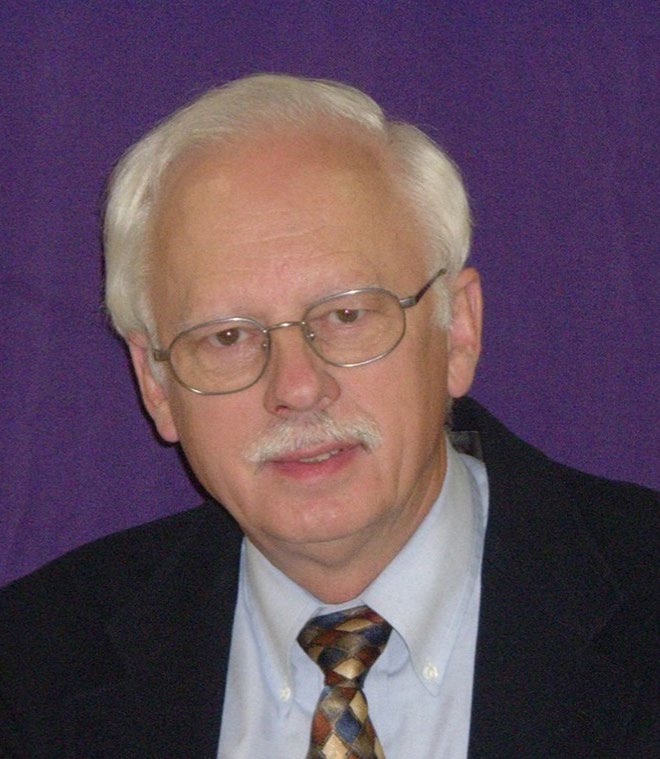
From an early age Ed loved to read, but he was also an avid outdoorsman. At age fourteen he caught the birding fever, and it never left him. As the years passed he became an expert ornithologist, and he spent many hours in the field searching for new bird species. He was a Boy Scout and loved to go camping, and he developed a love for numerous sports, especially tennis. He played four years on his high school and college tennis teams, and he continued playing into his seventies.
Ed was an extrovert who liked to perform in high school plays and participate in public speaking competitions. He developed a lifelong love for classical music, but he also played other kinds of music on the mandolin in his younger years and on the harmonica in later years.
Ed attended Cohn High School in Nashville, then David Lipscomb College, where he majored in English. Upon graduation from Lipscomb in 1958, he married Georgia Louise Montandon and they had two children, Susan and David. Also in 1958 he enrolled in Emory University, where he was to earn an M.A. in Librarianship and a Ph.D. in English. Except for his time spent in graduate school, he resided his entire life in Nashville, but that does not tell the whole story. Over a period of many years he traveled extensively in Latin America and Europe and visited his son and family in New Zealand and Australia. While he truly qualifies to be called a world traveler, he also loved exploring the Great Smoky Mountains National Park and nearby parks, such as Pickett State Park.
Everywhere that Ed traveled he made friends. His family has been amazed by all of the emails received from friends from all over the world in recent days. Ed once said he was lucky to have so many friends. He had a lot of friends because he knew how to be a friend and he truly never met a stranger.
In 1964 Edwin began his distinguished career in library work and university teaching. After earning his doctorate, he returned to Lipscomb to serve as Head Librarian and Assistant Professor of English. He became an English professor at Peabody College, Director of the School of Library Science at Peabody, and finally Director and Archivist at the Tennessee State Library and Archives. He served in this capacity for eighteen years, from 1987 to 2005. In 2004 the Tennessee Library Association established a scholarship in his name. In the course of his career he learned Spanish well enough to spend extended periods teaching library science in Colombia, Costa Rica, Paraguay, Venezuela, and Mexico.
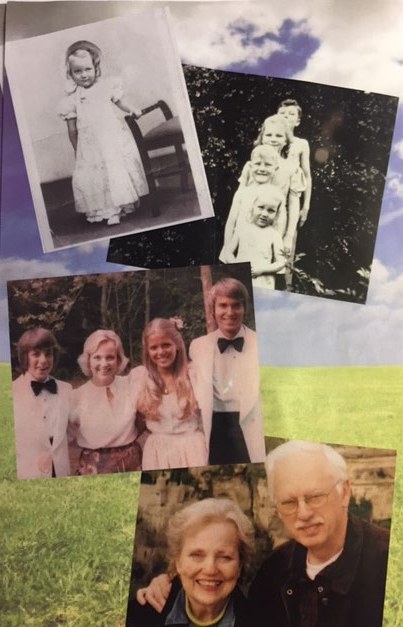
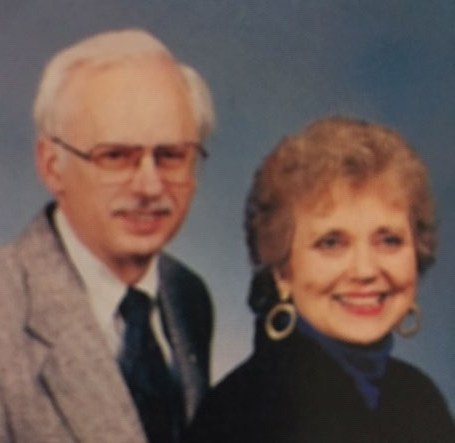
In 1978 Ed married Jane Ann Thompson McCrickard, and the two lived out the rest of their lives in devotion to each other, despite the fact that they both had to deal with serious health issues over the years. Janey passed away in September of 2016, only a week after Ed returned home from an extended hospital stay.
Ed is survived by his daughter Susan Bollig (Mark) of Franktown, Colorado, and their daughters April Carey (Daniel) and son Blake of Colorado Springs, Colorado, and Melissa Bolig of Boulder, Colorado. He is also survived by his son, Dr. David Gleaves (Donita) of Adelaide, South Australia, and their son Brandon and daughter Juliana. He is also survived by his brother, Dr. Robert Gleaves (Catherine) of Charlotte, North Carolina, his nephew Kevin Gleaves (Kim) of Rock Hill, South Carolina, and sons Michael and Daniel, and his niece Sharon Gleaves (Jerry) of Charlotte, North Carolina, and Sharon’s son Ryan Mobley (Sarah) of Gainesville, Florida, and daughter Shana Mobley of Charlotte, North Carolina. Finally, Ed is survived by a sister-in-law, Linda Carman of Nashville, a stepdaughter Allison Hunt (Brad) and son Reece of Pensacola, Florida, a stepson Michael McCrickard, Jr., (Anita) of Kensington, Maryland and their sons Liam and Connor, and another stepson, Miles McCrickard (Sherry) of Dickson, Tennessee.
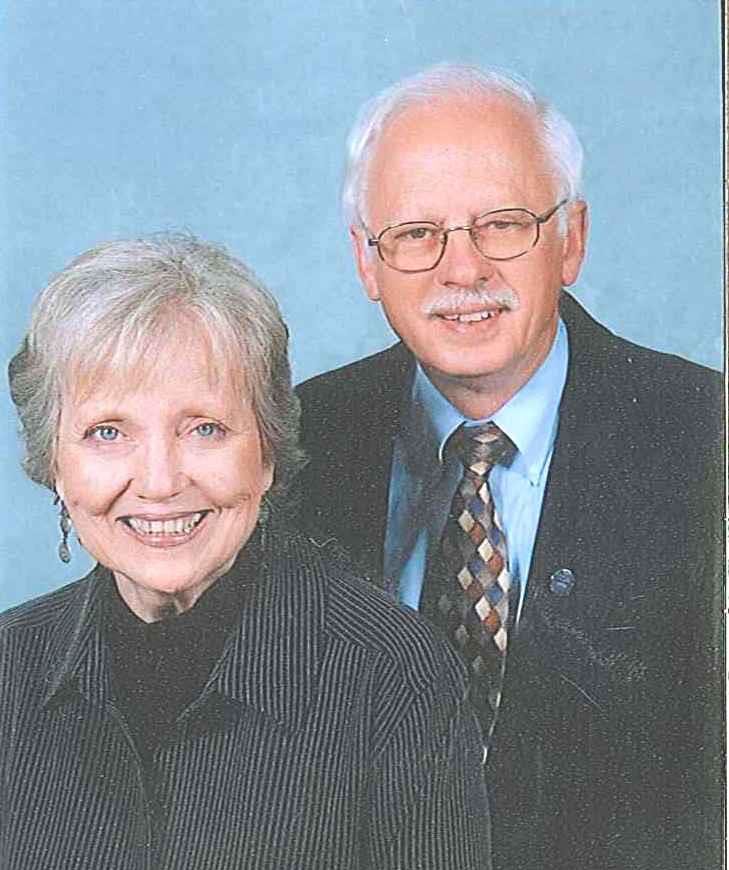
A former library colleague of Ed’s recently called him “this giant we were privileged to have in our lives,” and indeed he was a giant in his field and held so much knowledge within him. An old African proverb certaly applies to Dr. Edwin Gleaves: “When an older person dies, a library burns to the ground.” In lieu of flowers, the family suggests contributions to the Warner Parks, the Alzheimer’s Association, or a charity of your choice.
There will be a visitation at Otter Creek Church, 409 Franklin Road, Brentwood, TN, on Sunday, March 12, at 1:30 pm, followed by a memorial service at 2:30 pm. Procession to the cemetery will follow the service. Visit the online obituary: www.woodlawn-roesch-pattonfh.com.
Interview With Dr. Edwin S. Gleaves, compiled by Scott Cohen, Library Director, Jackson State Community College
Edwin S. Gleaves served as State Librarian and Archivist of Tennessee from 1987 to 2005. Prior to that date he served for twenty years as Director of the School of Library and Information Science at George Peabody College for Teachers of Vanderbilt University in Nashville, Tennessee.
Dr. Gleaves holds the B.A. degree in English from David Lipscomb College in Nashville and the M.A. in Library Science and the Ph.D. in English (American and Victorian Literature) from Emory University in Atlanta, Georgia. Postgraduate studies in Spanish led him to numerous teaching and consulting assignments in Colombia, Mexico, Paraguay, and Venezuela, as well as the United States. He was a Fulbright Lecturer to the University of Costa Rica in 1971.Dr. Gleaves has published widely in the professional literature in both English and Spanish. Among his publications are three monographs, approximately seventy articles, one hundred book reviews, and twenty-five consultant reports written in connection with institutions in this country and throughout Latin America.
Active in many professional associations, Dr. Gleaves participated in activities leading to the Second White House Conference on Library and Information Services, held in DC in July of 1991. He served as national vice-chair of the White House Conference on Library and Information Services Task Force (WHCLIST), from which he received a special award for distinguished service in 1990. In the same year, he also received the TLA Honor Award given by the Tennessee Library Association, from which he also received the Frances Neel Cheney Award in 1986 for “Outstanding Contributions to the World of Books and Librarianship.” In 2005 the Tennessee Library Association established the Edwin S. Gleaves Scholarship in his honor. In the same year he received the John H. Thweatt Archival Achievement Award from the Society of Tennessee Archivists.
Personal interests include classical music, computers, hiking, ornithology, Spanish, tennis, and reading whatever he chooses. He currently serves as a volunteer naturalist at the Warner Parks Nature Center and as a Spanish interpreter at the Siloam Family Healthcare Center. He is married to the former Jane Ann (Janey) Thompson and between them they have five children and six grandchildren who live, unfortunately for the grandparents, in four different states. This family diaspora makes frequent travel a joy and a necessity.
Chuck Sherrill, Director of the Brentwood Public Library
Dr. Gleaves: You hired a lot of people in your tenure at the State Library (including me) and I would like to know what are the most important qualities to look for in interviewing prospective librarians?
Ah, for the good old days when the administration and practice of librarianship could be nicely summarized and prescribed in a slender volume entitled simply Library Work. Yes, there was such a work written by Anna Lorraine Guthrie and published by the H. W. Wilson Company in 1906. Now, a century later, librarianship, or library science, has become library and information science (sometimes only the latter) and libraries abound in all their glorious infinite variety.
There’s no magic wand in the hiring of new employees, including librarians. Beyond appropriate education and experience, there are, I believe, a few core qualities that I would look for among candidates for a responsible library position:·Leadership, Compatibility, Dependability, Creativity, Flexibility, Vision, Honesty, Enthusiasm, Dedication.
On the negative side, if a candidate comes to you complaining about his/her former supervisor or organization, there’s a good chance that you don’t want that person.
All in all, I take pride in the key personnel for whom I had primary hiring responsibility at the State Library and Archives—Sandra Nelson, Jane Pinkston, Chuck Sherrill, and Jeanne Sugg among others.
By the way, there is a whole other world out there when it comes to library education, and the criteria for a good teacher—or a great one—may differ greatly from those of a practicing librarian. In my twenty years at Peabody, I hired ten full-time faculty members and no less than twenty-seven part-time and visiting faculty. (There were only four full-time faculty members, Mrs. Cheney being one of them, when I became director in 1967.) I wish I could say that I batted 1,000 among them all, but I must say that I found it harder to predict the success of a graduate level professor than that of practicing librarian.
Martha Gill, President, Friends of Tennessee Libraries
What initiatives do you recommend for Friends' groups in the current downturn?
It should be evident by now, to all who have eyes to see, that public libraries, while ready and willing to serve in all seasons, have a special role to play when the shadow of recession stalks the land. During the Great Depression of the 1930s, our public libraries became both a haven for the homeless and a source of inspiration and information for those who were mentally depressed and educationally deprived.
In perhaps the most dramatic and extreme case in the history of the world, the Leningrad Public Library became an indomitable refuge, refusing to close its doors, during the 1000-day siege of the city.
While not facing either of these extremes at this point in our recent roller coaster economic history, Tennesseans are facing record levels of unemployment since the Great Depression and level of homelessness that has shocked even our most optimistic economists. In the face of such deprivation, our public libraries offer a Clean Well-Lighted Place to which admission is free and information is abundant in all its forms.
To the Friends’ groups across our state, I say stay the course, keep up the good work, and most especially press hard in supporting your public libraries in ways that address the current difficulties that we are facing at all levels of government. The Friends of Tennessee Libraries (FOTL) has been recognized of late as a premier friends’ group, a model for local and regional groups to follow. Further information on FOTL can be found at the following website:· http://www.friendstnlibraries.org/index.htm
Annette Pilcher, formerly Circulation Librarian at Tennessee State University
I have always been curious about Dr. Gleaves’ interest in Central and South America. He was on an assignment in Costa Rica while I was in library school at Peabody and I know that he is as fluent Spanish speaker. I would like to know how all of that came about.
Thereby hangs a tale with a touch of jealousy. In the summer of 1961, while I was in graduate school at Emory, my younger brother Bob, a Spanish major in high school, college, and graduate school, asked me to accompany him on a three-week car tour of Mexico—at $5 per day. Well, we did it, and for slightly less than $5 per day, but it cost me my pride that my little brother could speak Spanish everywhere we went and I could not.
My opportunity came the following summer when my major professor at Emory approved Spanish as my second language on my doctorate, the only problem being that I had not studied Spanish anywhere at any time. So I signed up for a five-week Spanish course in Saltillo, Mexico, which remains the sum total of my Spanish formal education. I managed to pass the Spanish reading exam and used my new-found knowledge to research my dissertation topic on the Spanish background of the works of Ernest Hemingway.
But my fascination with the Spanish language and culture would not go away. A few years later, three years into my tenure as director of the Peabody Library School, I was offered the opportunity to teach for a six-month period at the Escuela Interamericana de Bibliotecología (Inter-American Library School) in Medellín, Colombia, which was followed by a Fulbright lectureship at the University of Costa Rica in San José, Costa Rica. Truth to tell, my Spanish was not all that proficient at the beginning of that period, but by the end I felt very much at home in the Spanish language and culture. Based on that experience, I was fortunate to receive a number of short-term teaching, interpreting, and consulting assignments in Colombia, Mexico, Paraguay, and Venezuela.
Annelle Huggins, Executive Director of the Tennessee Library Association and Associate Dean of Libraries at the University of Memphis
When we first met exactly 40 years ago (as I began my studies at Peabody Library School) you were deeply involved in the education of librarians. What major changes have you observed during the last 40 years in the education of librarians and do you believe that library educators are currently meeting the needs of the profession as they prepare librarians to serve the future generations?
Yes, I was involved in the education of librarians forty years ago. (Let’s see, that would have been 1969, wouldn’t it?) I left the ivory tower of higher education for the bullring of state government over twenty years ago; consequently, my current view of library education is somewhat removed from that of my Peabody days.
Two major changes I have observed are (1) content and (2) delivery systems. As for content, it would appear that library science has become information science or, in some cases, information studies. I assume that the extent to which this has happened varies from institution to institution. Hands-on courses such as cataloging are a thing of the past, supplanted by computerization of knowledge. The computer also figures in various areas of library administration. Indeed, much of library science has become computer science.
By delivery systems I mean how and where information moves from professor to student, and here things have really changed! It might be worth noting that Peabody was one of the first library schools in the country to offer off-campus
courses—first in Memphis (Memphis State), then in Huntsville, Alabama (Alabama A&M), and then in Conway, Arkansas (University of Central Arkansas). In all cases the courses were taught by full-time faculty members with full backup of the university libraries. They all went well and were well received—except by the Committee on Accreditation of the American Library Association. Nothing seemed to please that body, but they stopped short of imposing any kind of sanctions. Where would the committee of those days be now if they could see the accredited library schools offering total distance education in which students do not have to take a single course on campus?
Not that I am opposed to it, but in our case we did require that students take one semester on campus, usually in the summer, and those who did often said that they would not have missed the experience of that one semester on campus.
Kathy Bennett, Librarian at Hillwood High School
a. Please describe working with Frances Neel Cheney.
My opinion of Frances Neel Cheney can best be seen in my biography of her that appears in the festschrift on Mrs. Cheney that John Mark Tucker and I edited: Reference Services and Library Education: Essays in Honor of Frances Neel Cheney (Lexington, MA, Lexington Books, 1983).
How to say it in a few words? Simply that Frances Cheney was the most literate person I ever knew—what oft was thought but ne’er so well expressed. Just being around her was an education in itself. She and her husband Brainard were closely associated with the Vanderbilt Fugitives, who re-wrote literary criticism in this country and abroad.
For those of you who were not around during the Cheney days, she was clearly Peabody’s claim to fame when it came to library education and, for over thirty years, she was the nation’s number one reference reviewer, reviewing over 6,000 reviews in the Wilson Library Bulletin.
Despite all her achievements, there was not an ounce of vanity in the woman. She was a joy to work with. Before I accepted the appointment as director of the Library School, being scarcely thirty years young, I went to her to seek her blessing—or not. How would she feel, I asked, serving as associate director to an upstart such as myself? “Young man,” she said, “I have never considered one’s qualifications based on how long one manages to live on this earth.” I took the job.
b. Describe the thrill of bird watching.
Since these comments are intended for librarians, I think it worth knowing that my love of birds began in a library, a bookmobile to be exact. I was about fourteen when a bookmobile librarian in West Nashville convinced me to check out a little Golden Nature Guide entitled Birds: A Guide to the Most Familiar American Birds, and challenged me to go home and see how many birds I could identify. That challenge, along with my love of nature, was all I needed to compile my own life list of birds much in the manner that I have since collected books—and lived among both birds and books.
The thrill of bird watching? Well, it’s certainly that of listing the birds you see at different places at different times— a kind of lifelong contest with Mother Nature. It’s also the knowledge that wherever you may go, wherever you may live, birds are there in all their beauty, in all their infinite variety. Beyond the numbers, though, there’s nothing quite like a face-to-face encounter on a spring morning with a Scarlet Tanager, a Baltimore Oriole, or any number of colorful warblers coming through on their way to northern nesting sites. Because of my love affair with birds, I can say, along with Shakespeare: “Full many a glorious morning have I seen / Flatter the mountain tops with sovereign eye, / Kissing the golden face the meadows green, / Gilding pale streams with heavenly alchemy.”
Rebecca Tolley-Stokes, Librarian & Associate Professor, East Tennessee State University
a. What is your favorite book?
Among all the books I ever read? How much time do you have? OK, I will limit it to two: Miguel de Cervantes, The Adventures of Don Quixote, and Mark Twain, The Adventures of Huckleberry Finn. The former, a great comic saga, spoke to me in my earlier years, and the latter, a novel of high irony in its indictment of slavery, never gets old.
See the question on bird watching for the importance of one little book in my life.
b. Describe the relationship between Peabody Library School and institutions to which it supplied recently minted librarians. Was it amicable?
I can’t think of any example in which our relationship with the libraries and institutions for which we supplied “recently minted librarians” was not amicable. Indeed, it was their good will that kept them sending new generations of students to Peabody.
Just as significant, however, were the work-study/assistantship programs that we had with local libraries that helped finance the students’ education while providing valuable paraprofessional experience. The Joint University Libraries (later Vanderbilt University Libraries) and the Nashville Public Library, including its branch libraries, were two examples of a highly productive symbiotic relationship.
c. What is your fondest memory of Peabody Library School?
My fondest memories of my twenty years with the Peabody Library School are as follows: (1) students, (2) students, and (3) students—yes students in all their fascinating diversity.
Keep in mind that an MLS program differs from both an undergraduate program and a doctoral program in that for most students the MLS program is a one-year program—three semesters and you’re on your way to your career in librarianship! Each class of student has its own character and its own individuals that leave indelible memories on the hearts and minds of the faculty—and each other, for that matter. Many students stay in touch with each other after graduation and over the years we recorded several marriages between library school students.
It was the late Mike Rothacker who best related to the students and who, even many years afterward, remembered individual students year by year. And now, Mike, we all remember you.
d. What kind of reputation did PLS have in the state/region/nation?
Peabody College began to offer library science courses in 1919 and the Peabody Library School was officially established in 1928. It received an appropriation of $80,000 from the General Education Board in 1930 and in the summer of that year enrolled 153 students. At that time, it was the only school in the South offering two years of library science instruction. The associate director of the school, Lucille Fargo, was one of the country’s greatest authorities on school libraries. Dr. Louis Shores—prolific writer, editor, and educator—was appointed director in 1935, and was later followed by the inimitable Frances Neel Cheney.
All this indicated that, early on, Peabody was one of the best known library schools in the South and, indeed, in the country. One measure was its cosmopolitan student body that continued for the life of the school. We had a number of feeder schools from states that did not have an accredited library school: states such as Arkansas, Mississippi, Alabama, and—of all places—Dickinson State College in North Dakota. More often than not, there was a Peabody connection in those states and many others.
George Peabody College for Teachers also had an international reputation in education and related fields and the Library School basked in that limelight. During the sixties, the Library School was inundated with students from Taiwan, most all of whom stayed in this country. However, over a two-year period in the seventies, we had students from Bolivia, Brazil, Canada, Colombia, Costa Rica, Liberia, Malaysia, Mexico, The Netherlands, Nigeria, the Philippines, Taiwan, Thailand, and Venezuela—a large percentage of whom returned to their home countries upon
completion of their MLS degrees. (I hope that my assignments in Latin America during the early seventies had a little to do with the influx of Latin American students.)
Jeanne Sugg, State Librarian and Archivist of Tennessee
a. What was your first encounter with email use and how did it happen?
I remember the event quite well but am a little fuzzy on the date; my best guess is that it was in the late 1980s. I had a friend who worked in the State Department of Education who, I had been told, was one of the first in state government to have an e-mail arrangement in place. I asked him if he would demonstrate it to me, he said yes, and on a hot afternoon in August I met with my friend in a state office complex on Murfreesboro Road—a meeting that changed my life, and that of many of us.
The setup was primitive compared to today—a dark screen in which white letters moved across right to left in eerie silence. I don’t recall if a telephone was involved but the process of sending and receiving messages was mysteriously complicated—no images, no directories, just the process of imputing a series of letters and numbers that, I was assured, put us into contact with a computer somewhere in the state university system—in this case Memphis State University or Tennessee State University, the latter of which had been given the name HARPO (which, as many of us know by now, was Oprah spelled backward). The process was slow and belabored beginning with entering a question or two and telling the system to send it, followed by a long wait. Then, right before our eyes the response began to scroll slowly across the screen like a lazy snake uncoiling in the sun—except that there was no sun, only white letters on a black screen.
The rest is history, but not always a smooth one. It was not an easy sell to the administration in the Secretary of State’s office to invest in this still primitive communication technology. But in time we became the first office in the Department of State, and one of the first in state government, to have a working e-mail system. It was truly a great step forward.
b. What was the most rewarding national library event in which you planned/participated and what were its outcomes?
This is easy to identify but confusing at times. Following the White House Conference on Library and Information Services (WHCLIS) of 1979, a national taskforce entitled White House Conference on Library and Information Services Taskforce (WHCLIST) was formed to facilitate planning for the second White House Conference, which eventually took place in 1991. A key organization in the planning process was COSLA, the Chief Officers of State Library Agencies. Early on, I became active not only in COSLA but in WHCLIST as well, and was, in time, elected vice- president of the organization. The president, a layperson according to WHCLIST bylaws, was Joan Ress Reeves, a dynamic library advocate from Rhode Island.
WHCLIST held annual meetings in the years leading up to the 1991 White House Conference, culminating in a final meeting of WHCLIST in Nashville: the Nashville ’90 Conference, which by all accounts was a resounding success. Some wag from out of state called the meeting the Reeves and Gleaves show.
Meanwhile, the State Library and Archives was sponsoring a series of regional meetings, as well as one state-wide meeting, in anticipation of the White House Conference. Such meetings at the state level, along with the Nashville ’90
Conferences, provided major national momentum for the White House Conference itself, which was held in Washington in July of 1992, with both lay and professional representation from across the state of Tennessee.
c. Under your leadership, what were the greatest accomplishments of Peabody Library School?
Time will tell, not I, but I believe that the measure of our success in the Peabody Library School must inevitably be seen in the success of our graduates. Neither time nor space permits a full-scale analysis of our graduates over the years, but any overview of the Peabody Reflector will indeed reflect that many of our graduates became leaders in their chosen profession, both in this country and abroad.
In retrospect, I take special pride in our scholarship program funded under Title II-B of the Higher Education Act of 1965. Under this program we were able to provide substantial assistance to minority applicants at a time when the number of racial and cultural minorities with MLS degrees was disgracefully low. The impact of this program was best seen locally through assistance made to librarians who made major lifetime contributions to the Nashville Public Library, Tennessee State University, Meharry Medical College, and Fisk University—as well as other library systems around the country.
Incidentally, Peabody was one of the first such accredited library schools to offer a course in the literature of minority cultures, taught by Dr. Jessie Carney Smith, a graduate of Peabody, director of the Fisk University Library, and the first African-American woman to earn the doctorate in library and information science.
d. What was the most outstanding event of your tenure at TSLA?
The WHCLIS/WHCLIST initiatives, considering the number of people involved, would have to rank high among events with which I was associated, but the event that will have the broadest long-term impact would have to be Tennessee Electronic Library (TEL).
I remember well the day that TEL became reality. Jane Pinkston and I were sitting in the balcony of the State Senate Chambers as the sponsor of the TEL bill was reading (all too slowly, I thought) the justification for TEL and the $300K tag that came with it. Suddenly, Senator Cohen of Memphis raised his hand and demanded to be recognized. Uh-oh, we thought, what could happen to this bill at this stage of the game? Our fears changed to elation when Sen. Cohen moved that the bill pass by acclamation, i.e., that all members would sponsor the bill—which is exactly what happened. It was a great moment in the history of State support for libraries
As many readers will know, the $300K stayed in the State budget for only one year, but fortunately federal funding continued even after the State funds were cut. The Tennessee State Library and Archives, the Tennessee Library Association, TennSHARE, and FOTL have continued to advocate for the restoration of the hard-fought funds for TEL. In any case, TEL is now a reality, providing all Tennesseans with free access to an online suite of electronic databases covering a wide range of subjects and age groups. The coming of TEL was clearly a giant step forward in the provision of information to all Tennesseans.
Footnote: We almost named it ELVIS (Electronic Library Virtual Information System) but TEL won out after all. But ELVIS stayed as the generic password for several years.
e. Discuss the impact that the Gates Grants had on public libraries in Tennessee.
I don’t have access to the specific figures relating to the Gates Grants to Tennessee libraries, but I am confident in saying that their share of the grants exceeded that of any bestowed on public libraries in Tennessee—and, seen broadly, the nation—including the grants of Andrew Carnegie.
The impact of the Gates Grants on public libraries in Tennessee? I dare say that there is a good chance that that these grants saved many of our public libraries a death by obsolescence. Without the hardware given outright to public libraries, and the training that came with it, I believe that many public libraries would not have survived as a viable and competitive source of information in this information-rich environment.
Scott Cohen, Library Director, Jackson State Community College
How can libraries of all types stay viable in this age of budget cutbacks?
Given the great variety of libraries in Tennessee, and the equally great variety of levels of support, it is difficult to generalize about “this age of budget cutbacks.” At this writing, there are signs that the recession is receding, but also that unemployment continues to climb above ten per cent. The housing market is still reeling as thousands of Tennesseans have had to sell their dream homes and settle for housing—if any—well below what they have experienced and expected. Consequently, housing starts are well below that which we have expected, adversely affecting employment levels. It is a vicious economic circle.
This conundrum hits hard at the heart of the American dream and, in the process, endangers support of libraries, especially those in the public sector. Seen in another light, however, the basic mission of all libraries, the provision of information, may well be what this nation needs most today. If indeed knowledge is power, perhaps we can make the case, in every venue in which libraries play a role, that never in our history have libraries been so essential to the wellbeing of our state and of our nation.
Remarks for Dr. Gleaves’ Memorial Service, by Chuck Sherrill, State Librarian and Archivist of Tennessee
It is a great honor to be able share with you a few of my memories of Dr. Gleaves. I was fortunate to be his friend for
nearly thirty years, but many of you have known him far longer. On the other hand, I did have the opportunity to work
with him daily for many years, and sometimes our work family knows us very well indeed.
Now, I will say that Dr. Gleaves never once told me that it would be all right for me to call him Ed. But not long after
he retired, I had to be hospitalized for an extended period, and he came to sit with me on several afternoons. We had
wonderful long talks about books and I decided to test the waters by referring to him as Ed. He went on as though it
were the most natural thing in the world, and I suppose it was, for him. But to me it seemed like, at fifty, I had finally
grown up.
Everyone who knew Ed knows he was well-read and well-spoken. When I first went to work for him at the L&A, I
had been running a public library in a small East TN city. I had moved there from an academic background at Western
Reserve in Cleveland, Ohio, where I grew up. It didn’t take me long to learn that I had to slow down my speech and
become much less formal in order to fit in. I managed to do that, and we loved living there.
But then, after ten years of working in folksy informality, Dr. Gleaves invited me to come and work for him in
Nashville. I had gotten to know him pretty well by then, I was in awe of his fine writing, of the literary background
that gave so much depth to his conversation, and of the intellect that was shown through his excellent leadership of
the state’s library system. I felt entirely inadequate and greatly honored at the same time.
I started the job in the winter, and after just a week or so I came down with a terrible case of the flu. I didn’t have any
sick leave, but there was no way I could go to work. I called in and left a message for Dr. Gleaves and hoped I wouldn’t
be up for my first reprimand so soon. I was dumbfounded when he phoned me, not to scold me for taking leave, but
to express concern and to chat a few minutes about my health and other things.
I realized then that I wasn’t just working for a great man; I was working for a kind and caring one as well.
But I was still nervous about the quality of my speech and especially my writing. I discovered that Microsoft Word
had a feature that allowed you check the reading level of a document. I never told him this, but for the first several
years, I checked every memo I wrote to Ed. If it didn’t have at least a tenth-grade reading level, I went back and added
a few big words to spruce it up.
Ed and Janey invited my wife and me to go to plays at TPAC
with them not long after we came to Nashville. I remember
meeting Janey for the first time as we took our seats for a
performance of Les Miserables. Sitting next to Ed, I felt
compelled to confess that I had tried to prepare by reading Victor
Hugo’s book, but just couldn’t get through it. Janey leaned
around him and waved her hand at the auditorium, and said,
“Chuck, you are probably the only person in here who even
tried.” What a wonderful couple they were.
At least once a week, Ed and I would leave the Archives and walk out to lunch. I remember the first time we had lunch
on our own. He began to talk about finance and investments and pulled out a pen to make a sketch on his napkin.
When he started writing numbers and talking about multiplying income, I had this sudden fear that he was about to
recruit me to sell Amway. Really, I did!
But what he was explaining was the value of saving, even a little at a time, and how that savings could multiply by
the time I retired. He was encouraging me to develop good financial habits because he cared about me and wanted me
to do well. What a boss! Is it any wonder that I came to be a lifetime admirer and disciple of Ed Gleaves?
Another thing I learned about Ed was that he was remarkably frugal. Did anyone else ever notice that? He liked to go
to Burger King, and would always order a Junior Whopper and a drink. I’d always get the “meal deal” with fries, and
inevitably Ed would reach over and eat half of them. Sometimes he would hint and say, “Aren’t you going to get any
ketchup with those?”
I loved working for Ed, and for Jeanne Sugg who kept him – and all of us – organized and on track. But I was not so
happy working in the political environment, and at times I was downright miserable. I remember one meeting where
I was to make a short presentation. I was blindsided by a critic who ripped me to shreds. As we walked back to the
library, I said tentatively to Ed, “I feel like I got stabbed in the back in there.” He stopped and turned to me and said,
“I’d say it was more like a dagger plunged directly into the heart.” Empathy always helps.
There are so many reasons to be thankful that my life intersected with Ed Gleaves. But of greater importance to
thousands of people is the mark he left on Tennessee libraries.
Because he had a curious and nimble mind, he was one of the pioneers for applying computer technology to libraries.
He drove state government bureaucrats crazy by insisting that we buy pieces of equipment no other department had
heard of yet. He experimented, and read, and learned, and then he led the way. Because of Ed’s vision and foresight,
Tennessee has the best network of support technicians for public libraries of any state in the union.
Because of Ed’s tenacity and determination to serve not just library users, but everyone, we have the Tennessee
Electronic Library -- arguably the best statewide collection of online resources, available free to all Tennesseans. Ed
envisioned that service, fought for it, championed it, and launched it.
He was a great librarian, a great man, and a great friend. And I will miss him.
EULOGY FOR EDWIN GLEAVES by Perry C. Cotham…March 12, 2017
Last Tuesday afternoon, after a life journey of four score and one years plus seven days, Ed Gleaves, a loved and loving father, grandfather, brother, and, for all of us, a dear friend, slipped the surly bonds of time and place and entered eternity. All of us are here today because we were surely touched in some way, big or small, by the kind of person Ed was and the life he lived. The roles Ed assumed in life were many:
Besides being a devoted family man, he was a professor, a scholar, a classroom teacher, an administrator, a researcher, a writer, an historian, a linguist, a bibliophile, a part-time philosopher and full-time realist, a lover of nature, an ornithologist, an active citizen and voter, a civil servant, a world traveler, a skilled tennis player, and, last but not least, an avid sports fan and even more avid Vanderbilt basketball and baseball fan.
Ed’s humor was witty, his heart was pure, his thoughts were heavy, his knowledge was deep, his interests were wide, and his love and devotion to family seem unparalleled, a devotion equaled by precious few yet not likely surpassed by any. Having said this much, I have not declared the most honorable trait possessed by Ed Gleaves: He was a true gentleman.
Two passages of Holy Scripture describe Ed. One is the beatitudes of Jesus in the Sermon on the Mount. I see Ed embodying traits of a true disciple: One who is humble, and never vain or boastful (his only subjects of bragging were his wife, his children or grandchildren, the libraries he served); one who is meek; one who is a peacemaker (I can tell you stories of how Ed sought reconciliation when there was brokenness; who sought knowledge where there was ignorance); one who is righteous; one who is pure in heart.
The other passage is Galatians 5, where Paul talks the “fruit of the Spirit” being love, joy, peace, kindness, patience, goodness, and long-suffering. Seeing those traits in Ed confirms the reality of the Spirit of Christ living in him.
I did not mention that Ed was a missionary, and perhaps such a claim is overstated (to say he was a missionary), yet one most surprising encounter with Ed was in 1998 when I was in Guatemala doing medical missions with Health Talents, and, to my surprise, there is Ed who came on a separate trip to be a translator between parties who knew only English or only knew Spanish.
I was honored whenever Ed called me friend. When I was going through a really difficult time as a full-time minister, Ed and Janey reached out to me with frequent invitations to share a meal or just visit in their home.
I would love to tell you some of the humorous stories I have experienced with Ed, one being the way he could teach a college class by inviting so many guest speakers in one semester that it seemed to make his job fairly easy. Or the way he would focus on lyrics in a hymn and then write me an email asking in a facetious way what some of those lyrics could possibly mean. He was an incisive critical thinker.
As a friend to me, two experiences in one day are indelibly imprinted in my mind. For my last Sunday to preach at Otter Creek, Ed had written a longer personal tribute entitled “Grace Under Pressure” that he asked be published in the church bulletin. I value that tribute even still. And on that Sunday, Ed was teaching an adult class on the Bible and modern literature. I walked into that classroom a few minutes late, tried to slip into a back chair, and Ed saw me and began weeping in front of all in the room. I knew Ed had a heart for me that was bigger than I deserved, both at that moment, and at any moment in my life. He was truly loving, sensitive, empathetic, and tender- hearted.
I close by declaring Ed had a spiritual dimension that shunned ostentation yet valued honesty and sincerity. When he and Janey dropped by Owen Chapel one Sunday a few years ago just to hear me speak, my topic that Sunday was on doubt. My point was that doubt was a sign of critical thinking and growth, not a weakness in faith. After the service, Ed slipped me a card in which he had written, off the top of his head, a quote by Tennyson: “There lives more faith in honest doubt, believe me, than in half the creeds.”
Scripture requested by family: 1 John 4: 7 - 12
Ed wrote an autobiography of limited publication he entitled Glorious Mornings. He was indeed introspective and sentimental. He wrote: “I had my own religious Vietnam…we are part of all we met, and whatever we are today is attributable, at least in part, to the knowledge, values, and convictions that came our way through the Church.”
Today, we praise God for bringing Ed Gleaves into our lives and we thank God for his legacy of so many admirable and wonderful traits that bring nothing but blessing.