Justiss, Howard
Obituary
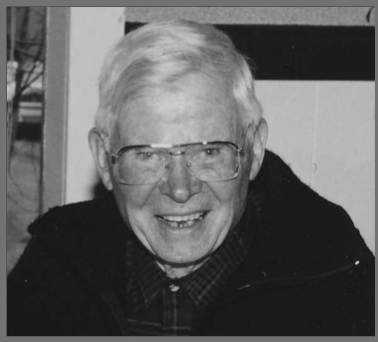
November 23, 2011. Howard Justiss was born into a farming family in northeast Texas in 1911. After graduating from Abilene Christian College, he became a teacher, then principal at Daingerfield Texas High School. Attending summer graduate studies at the University of Colorado, he met Zona Schwandt, a student from Wisconsin. They were married in 1942, while Howard was serving in the U.S. Army Medical Corps during World War II. After the war, Howard's lifelong passion for child welfare began to develop while he and Zona served as house parents in a children's home in Florida.
He received his Master’s degree in social work from the University of Wisconsin and pursued a career in child welfare, first in Edinburg, Texas, and then in Nashville. After several years as Supervisor of Protective Services for the state of Tennessee, he fulfilled his dream of providing professional services in a church-related context by serving as the first Director of AGAPE Nashville, a social services agency supported by members and congregations of the Church of Christ.
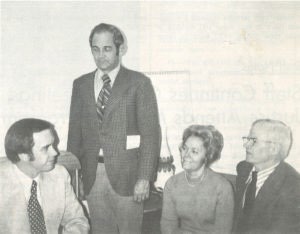
Newly appointed board: Miles Ezell, Jr., Will T. Vance, Jane Shaub, Howard Justiss 1973
In August, Howard had celebrated his 100th birthday with many of his family, long-time friends, and fellow residents and staff of Lakeshore Estates - the Meadows in Nashville. Howard is survived by his six children and 13 grandchildren: Joel (Jeanne) Justiss [grandchildren Benjamin, David, Stephen]; James (Yooko) Justiss; Alan (Alice) Justiss [grandchildren Scott, Paul, Katy]; Keith Justiss; Leeta (Peter) von Buelow [grandchildren Carl, Jaspar, Sgt. Roland USMC, Josef, Stefan, Johannes, Francesco]; and Kevin Justiss. He is also survived by a sister, Bessie Cason of Atlanta, Texas, and a brother, C.Y. Justiss of Daingerfield, Texas. Visitation will be from 4 – 8 pm Tuesday evening and 10 – 10:45 am Wednesday morning at Harpeth Hills Memory Gardens, 9090 Highway 100. Funeral services will be at 11 am Wednesday morning, November 30, in the chapel at the same location, with interment to follow. In lieu of flowers, donations may be made to the Zona and Howard Justiss Fund at AGAPE Nashville, 4555 Trousdale Drive, Nashville, TN 37204, to assist children with special needs.
Eulogies for Howard Justiss…by Joel and Jim Justiss
Joel Justiss
Most of you knew my dad and share my admiration for a number of qualities he exhibited:
• his hospitality and genuine interest in getting to know people well, • his humility, openness to new ideas, and concern for people rather than power,
• his respect for individuals, even those with very different lifestyles or views.
I hope others here will say more about those characteristics because I want to focus on another one—his lifelong passion for helping children by strengthening families.
The scripture I heard my dad quote most often was from the letter of James:
What God the Father considers to be pure and genuine religion is this: to take care of orphans and widows in their suffering and to keep oneself from being corrupted by the world.
I see two major influences that led him to a professional career in social work: his farming family background and his openness to learning.
We are inevitably influenced by our family heritage and especially by the parents who raised us. In his memoir, Roots Deep in Texas, my dad gives a glimpse of how each of his parents demonstrated the concern for people that was the hallmark of his career. He wrote,
Even during the Depression, Papa continued to improve the land. He hired people who wanted to work, anyone who had no income. He paid one dollar per day. He did it even though he had to borrow the money at 10% interest because the workers needed food and he wanted those fence rows and hedges cleared. (p. 56)
Once my dad’s mother, who had twelve children, was asked how she managed so many children and if she ever wished she didn’t have so many. Her response was, “There were times when I would have like to have had them farther apart, but I wanted each one! When I held each tiny baby in my arms and looked into its face I wanted to hold it forever.” (p.20)
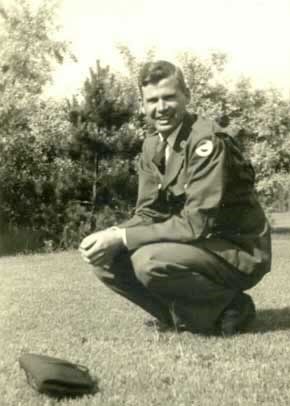
My dad admired and imitated the generosity and love he saw in his parents.
It may come as a surprise to anyone who knew of the long hours of strenuous labor that my dad invested in his gardens, but as a teenager he hated having to put down his book to go out with his dad and brothers to the endless, exhausting farm work. He told himself, “When I grow up and have children, I will not make them stop reading to go to the fields to cut sprouts! Never!”
He and my mother were both school teachers and avid readers. My dad’s interest in learning opened him to new ideas that he would probably never have encountered if he had remained a farmer. One summer while he was taking graduate courses in education at the University of Colorado, he met my mother, who had come from Wisconsin to study there. In graduate school at the University of Colorado, my dad learned that some good things can come from states other than Texas.
My parents were married during World War II, and after the war they took the job of house parents in a children’s home in Florida. It seems the experience of caring for children who had been neglected and mistreated motivated him to find ways to help them. At the age of forty, he went back to graduate school, this time in social work, and earned his master’s degree from the University of Wisconsin. As he learned more about the complexities and difficulties of
social work, he began writing articles for church papers on the need for trained social workers to manage the placement of foster and adoptive children, to avoid the emotional trauma caused by the common practice of casual placements by untrained people.
As he gained experience in the field, working in the Rio Grande Valley of Texas, he often came home with tragic stories to tell over the dinner table. My dad was very reticent about expressing emotion. (He was the stiffest person I’ve ever hugged.) But we heard the grief and pain in his voice as he told of children enduring daily beatings by their parents, and mothers with active tuberculosis leaving the hospital to go home to care for their children. He kept learning from experience and worked to find innovative ways to alleviate the suffering he encountered.
At the age of fifty, my dad accepted a new job which both tapped into and strengthened his passion for good child care in families. As Supervisor of Protective Services for the State of Tennessee, he screened all referrals for termination of parental rights and conducted workshops for social workers on how to work with parents who neglected their children. We continued to hear painful stories, but there were heartwarming successes too.
A few years later, my dad accepted the role of Director of AGAPE (now AGAPE Nashville). This was the kind of work he had longed for ever since he entered the social work field—helping children by strengthening families, while working as a church-related agency.
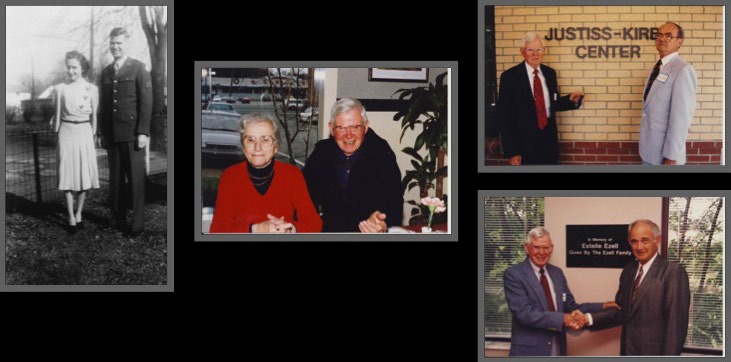
Figure Howard and Zona during his time as a conscientious objector in WW !!, assigned to the medical corps. The opening of the Agape building and a picture with Miles Ezell are on the right.
• He was enormously gratified by the enthusiasm of the supporters and volunteers who got the agency off the ground and continued to support it over the years. • He was thrilled by the professional skills and dedicated efforts of the staff, as the agency grew and expanded its services, and as new agencies in other cities modeled themselves after it. • He felt his life’s dream was fulfilled when he saw adopted children grow to healthy maturity, single mothers cared for during their time of stress, and family members learning relationship skills through counseling.
My dad officially retired at the age of sixty-five, but his work barely slowed down. He continued to serve as a consultant for AGAPE and also served on special committees for the Tennessee Department of Human Services, Christian Counseling Services, and the Davidson County Foster Care Review Board. He found the latter to be especially rewarding, because, in his words, “My conviction was that children should be returned to their own parents, if possible; if not, parents should be helped to surrender their child for adoption instead of leaving them in limbo in foster care, year after year.”
With the Foster Care Review Board, he helped to get legislation passed that required a court-supervised review of the case of each child in placement every six months to help prevent those children from growing up without the security of a family.
In retirement, my dad devoted more of his attention to personal interests as well. He and my mother regularly cared for Alan and Alice’s children—Scott, Paul, and Katy—while their parents worked. He cultivated the largest garden ever, sharing the fresh tomatoes, squash, and other produce with many neighbors and friends. He and my mother each wrote a book of their memoirs. Those books are treasures to me.
They also took some road trips together, one purpose of which was to collect rocks from a variety of locations, including East Tennessee, New Mexico, and Wyoming. One unusual part of his extensive collection consisted of stones described in the Revelation to John as the foundation stones of the New Jerusalem.
My dad studied and taught the Bible all his adult life. As a skilled teacher, he never lectured his classes but helped the classes learn by asking questions and encouraging discussion. In his later years, he became particularly interested in the prophecies of Jesus’ return to rule the world. He saw the establishment of the Jewish state of Israel as a fulfillment of prophecy that strengthened his faith. Encouraged by that event, he expected Jesus to return soon and hoped to see that occur in his lifetime.
My dad was happy with his life. He was not a complainer, and it never would have occurred to him to wish for Jesus to return to end his sufferings. I believe his hope was that Jesus’ coming and the establishment of the New Jerusalem would mean the end of the suffering of children and other defenseless people. From my perspective, his life was a prayer for that day to come. –Joel Justiss
Jim Justiss
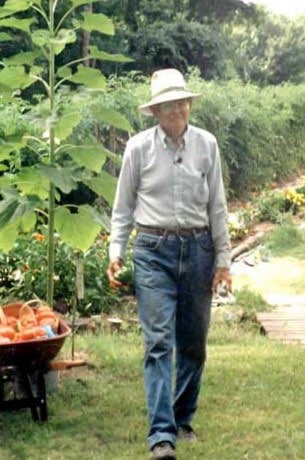
I am proud of my father, Howard Justiss.
I have lived away from him my entire adult life, so I haven’t had a clear awareness of everything that happened in his life, but I am proud of him.
I told a co-worker, a man from New York City, the story about how Howard was a school principal in a small Texas town when he registered for the draft on the eve of World War II. He studied the Bible and concluded that he had to register as a conscientious objector because one should not take human life or even hate one’s enemy. This was not a popular decision at that time or place, but Howard had the courage to do what he believed, and he served in the army medical corps.
I told my co-worker the story about how Howard resigned his job with the State of Tennessee, giving up his state pension at the age of sixty, to become the first Director of AGAPE. His passion to care for unwanted children gave him the courage to take that step.
These last few years I was puzzled about why so many of you have done so much for him. I asked my co-worker why you all would do that for my father. He said, “I know why. From the stories you told me, your father is a mensch.” Mensch is Yiddish for “a person of integrity and honor,’ a particularly
good person. And that clarified things for me. Even someone who didn’t know Howard Justiss can take his measure from hearing about his life.
Howard Justiss is an inspiration to me. I admire the courage he had and I’ll try harder to be as cheerful as he was. Jim Justiss
From Tom Burton, AGAPE Executive Director, an excerpt from the AGAPE tribute to Howard.
Besides his work and his family, Howard had a passion for rocks. He taught me many lessons through the rocks….A number of years ago, Howard gave me a large granite rock weighing a little more than twenty pounds. There are several markings on it made by a glacier. It sits in a wooden holder which Howard carved. On one visit, Howard looked at me and asked me if I thought it was a pretty rock, and I said, “Yes, it is.” And Zona said, “He must have picked up at least two hundred until he found this one. This was the right one.” I told Howard I thought the lines in the rock were pretty, and he said, “Yes, they are. Did you know those are the weaknesses, the imperfections of what otherwise would have been a perfect stone? I want to call this the AGAPE rock and it will represent the children with special needs. I think you will come to love children more because of their imperfections which reflect their inner beauty.” I keep that rock in my office just to remind me of Howard’s lesson.
Comments by Sandra Collins
Jerry thought the newspaper obituary too impersonal. Here are some homier tidbits. I wish I had written down all I know. This is what I remember now:
Howard and possessions:
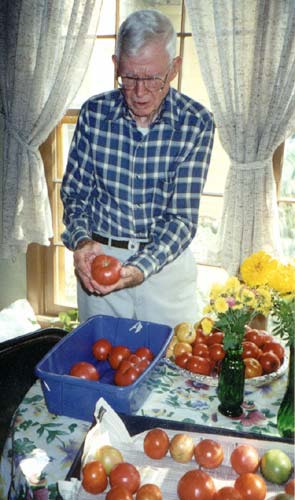
• personally thrifty, extraordinarily generous with others • always bought the cheapest white bread Kroger sold • used and reused tea bags • helped send a young man from Asia and a girl from Ethiopia through college (the girl lived with the Justisses and became a second daughter) • would bring all sorts of people home for dinner and overnight accommodation (Zona once said she often thought, "Who are all these crummy people?) They had six children of their own to feed. • brought vegetables from the garden to church, along with gardenias in separate paper cups for all the women who might want them • when delivering meals on wheels, would take food Zona cooked (tasted better and cost less than what others spent to buy meals) • wore clothes that had been repeatedly mended • wanted to give gifts to everyone he met, so began to give white rocks to remind them of the white stone in the Revelation on which "a new name was written" (began to tape scriptures to the rocks which were at first the souvenirs he brought from trips they made and later from the Lakeshore parking lot)
Howard and food: weighed around 125 pounds his entire adult life.
• loved to grow and eat fresh vegetables and watermelon • did not want food items to touch one other (When I brought something like roast with vegetables or a casserole, he would say, "Zona loved what you sent.") • could have lived on peanut butter and bread
• loved any kind of ice cream, never spilled a drop • loved tea, hot or cold
Howard’s personality and character
• interesting combination of gentleness, humility, and fierce independence • always mediating, gracious, pleasant, warm to others, open, inclusive • independent in taking nontraditional Biblical views (an ardent Bible reader, read to Zona every night of their long marriage) • refusing to carry a gun in WWII, a conscientious objector who served as a medic and as one who helped rehabilitate soldiers on seven round trips by ship from Europe to America • looking at the half of the room he had been given at the Meadows and saying quietly, "The agency says I am to be here and I can only walk through there to the hall, etc.," recounting with a quiet voice what he had been told he could or could not do but not complaining. • saying, "They say I cannot go anywhere without this walker, that I need it for protection." Then he would lift it high in front of himself like a shield and laugh, "For protection!" Once, he walked out the door of Wedgewood and up and down the street. Aides rushed to get him and lead him back. Then out in the back parking lot, he noticed the gate opened and so walked down the street to the front of the building. He told me about these incidents with a twinkle in his eye. Before he had to use the walker, he would circle the parking lot at Wedgewood 33 times, running on the last lap (He was in his nineties then.) • writing a controversial article for the Nashville newspaper concerning the deplorable care in orphanages (He was asked to come visit an orphanage, saw children dressed in their best paraded in to sing to him; then when it was time to go, a four-year-old grabbed hold of his leg and said, "Take me home with you." Howard said often, "That was when Agape was born.")
Kindness, compassion, gentleness, humor, independence, decency all survived his memory. Even when he could not recall my name, he would invite me to sit, eat with him (“I could make arrangements with the agency for a meal for you.”) and thank me for having come.
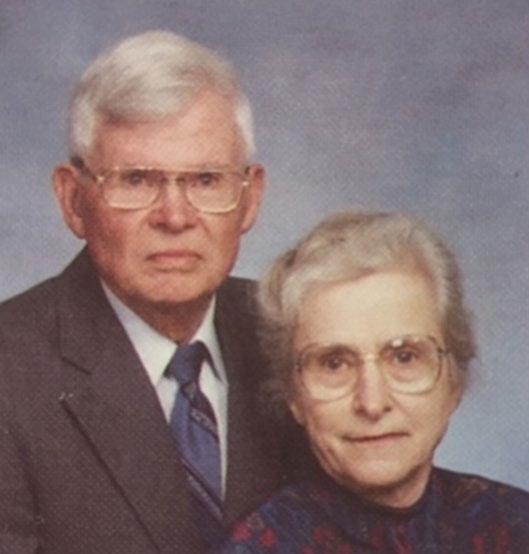
He once asked a marriage class I was in, “Do you believe in love at first sight?” Most of us shook our heads. “I do,” he said. “When I walked into a University of Colorado so many years ago, I saw Zona, and it was love at first sight.” The marriage lasted from 1942 until her death in 2008. Actually, in his case, it lasted till 2011. I have lost a dear, dear friend from whom I continually learned.
To read more about this remarkable man,
type Howard Justiss into Google for Justiss clan website. (www.mountaintrail.us/Howard/HowardJustiss Eulogies.htm)
His son Joel has pictures and the story of Howard’s life. Howard’s own autobiography is Roots Deep in Texas and is available at Amazon.com. He also wrote a brief pamphlet chronicling the history of the men in his family who were pacifists, conscientious objectors, who fought in wars all the way back to the Revolutionary War: One Family in America’s Wars.