Martin, David Houston
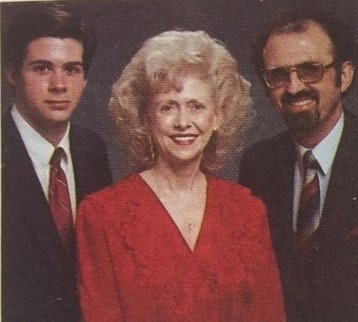
Dr. David Houston Martin of Nashville, Tennessee, passed away on February 6, 2018. He is survived by his son, Derek Martin and several cousins. He is preceded in death by wife Auline Nix Martin; by parents, Ollie and Macie Martin; and his son, Damon Martin.
David taught psychology at Tennessee State University and Lipscomb University. David also served as a minister at Stroudsville Church of Christ and Belmont Church. David enjoyed nature and hiking. He loved the poem “Trees” by Joyce Kilmer. David was a current member at Otter Creek Church of Christ and led a discussion class. David was proud that he once guarded NBA legend Jerry West in high school when he lived in Dunbar, West Virginia.
Family and friends will gather for visitation at Woodlawn Roesch-Patton Funeral Home on Thursday, February 8, 6:00 pm to 9:00 pm and Friday, February 9, from 9:00 am to 11:00 am, with funeral service to follow at eleven o’clock in the morning, also at the funeral home. Interment will follow the service at Woodlawn Memorial Park. Rather than sending flowers, please send donations to the American Diabetes Association. Please visit the online obituary:www.woodlawn-roesch-pattonfh.com.
Honoring and Celebrating the Life of David Houston Martin, December 13, 1939-February 6, 2018
Order of Service
Amazing Grace
Welcome Jerry Masterson Ralph Samples, Lipscomb Friend Perry Cotham, Otter Creek Church
Friend Hymn of Praise Jerry Masterson, Otter Creek Church Friend
Molly Ann Bates, Alabama Friend
Alabama Friend
In the Garden Derek Martin, Reflections
I’ll Fly Away
Included on the pages of the program were the following:
Bible Passages That Reflect David’s Faith
Like the Jews of Berea, David energetically sought truth.
These Jews were more receptive than those in Thessalonica, for they welcomed the message very eagerly and examined the scriptures every day to see whether these things were so.
Like the Apostle Paul, David courageously and fearlessly spoke his mind in front of skeptical audiences.
Paul stood in front of the Areopagus and said, “Athenians, I see how extremely religious you are in every way. For as I went through the city and looked carefully at the objects of your worship, I found among them an altar with the inscription, To an unknown god. What therefore you worship as unknown, this I proclaim to you.”
From his youth in a West Virginia church to his leading a class at Otter Creek Church just two weeks ago, David lived for this promise.
For this perishable body must put on immortality, and this mortal body must ut on immortality. When this perishable body puts on imperishability, and this mortal body puts on immortality, then the saying that is written will be fulfilled: “Death has been swallowed up in victory…thanks be to God who gives us the victory through our Lord Jesus Christ.”
Words That Reflect David’s Perspectives
Martin Luther King There comes a time when one must take a position that is neither safe nor politic nor popular, but he must take it because his conscience tells him it is right. Our lives begin to end the day we become silent about things that matter. I believe that unarmed truth and unconditional love will have the final word in reality. That is why temporarily defeated is stronger than evil triumphant.
Dionne Warwick (from “Extravagant Gestures)
And for my life, I’ve no regrets,
At the most, just one or two. I’ve got everything I need; I’ve got no regrets. The sun is going to shine again. I don’t know when.
Violets still are blue; birds still need to fly.
We’ll be together again, sometime. Keep believing; this I know is true…
And in my life, I’ve learned a lot Of who I am and who I’m not and of who I want to be.
I’ve got no regrets. The sun is going to shine again. I don’t know when.
Violets still are blue; birds still need to fly.
We’ll be together again, sometime. Keep believing; this I know is true.
Eulogy for David Martin
(by Perry C. Cotham, for services on February 9, 2018)
The Founders Day oratory contest was conducted once a year at David Lipscomb College in an observance not only to honor the co-founder and namesake of the college, David Lipscomb, but also to select and honor the college’s most outstanding public speaker. As a Lipscomb freshman, I had known David as an upperclassman around campus, I had seen him play center on the intramural basketball team, he even played intramural football, and I knew of his running on the varsity track team, his involvement on the varsity debate team, and in intramural forensics. David was a very popular student, likely known by virtually everyone on campus, indeed as I pulled out my old ’61 Lipscomb Backlog, the index led me to eleven pictures in which he was featured in that yearbook.
And yet, it was this 1961 Founders Day oration that almost launched him onto a pedestal for me. This was the young man in black rims, nicknamed Ollie (after his father), who gained respect from his fellow students as both an intellectual and likable person.
In this dramatic speech, delivered fifty-seven years ago, David began by marveling at the first manned spaceship, carrying astronaut Alan Shepherd, who had been launched into the wonders, the mysteries, and the secrets of outer space. (Ironically, on the very day David died [the past Tuesday], there was another launch of a much more modern space ship called the Falcon Heavy.) Yet, now, David challenged the Lipscomb student body to study psychology, to study inner space, the mind, and seek to understand its wonders, secrets, and mysteries of the human mind, that by contrast we never need to leave the earth and do not risk our physical lives.
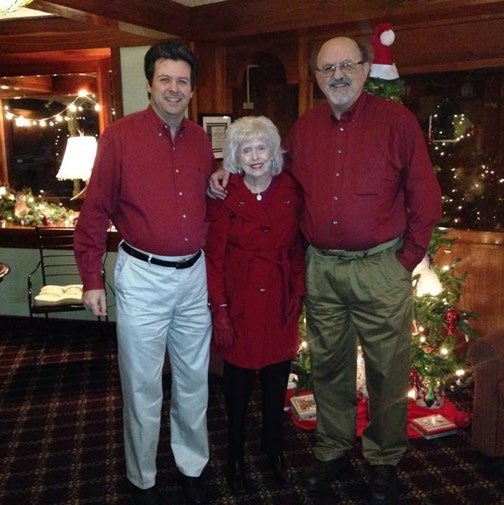
As I reflected on David’s life, though it surpassed the biblical “three score and ten” but fell short of the four score years mentioned in Psalm 90, that life now seems too brief, we feel cheated that we could not tell him good-bye and “thank you” for all that he meant in our lives. David played many roles with his many gifts and talents and interesting personality, but mainly because of a character that deeply manifested “the fruit of the Spirit.”
I made a list of some of his many roles and traits:
--A devoted and loving husband.
--A devoted and loving father.
--A Christian gentleman.
--A university professor…..and an intellectual. In a humble and gentle way, he provoked students and friends to think critically. There is no way to measure how much he influenced students in his classes who were psychology and counseling majors.
--An outstanding orator. He won first place in that Founders Day oratory contest back in 1961 and he had won third place the year before.
--A lay preacher. I’m sure you know what I mean by that term. He never sought to be a career preacher and was not a Bible major, and yet his thunderous voice and dramatic style of delivery were such that surely, in my opinion, he was a better speaker than ninety percent of the career preachers, not only in his delivery but in his content.
--A teacher of many subjects, certainly a Bible teacher. It was my honor to be co-teacher with David in an adult class at Otter Creek and our subject for the class was “Death and Dying from a Christian Perspective.” He knew the grief process thoroughly, not just from an academic perspective, but existentially, from real life.
--A seeker and a student, always learning, perhaps not always certain what he was seeking but willing to risk in order to grow. What he sought was surely linked with issues of truth and justice.
--A Stoic in most positive sense, akin to the Stoic philosophers of ancient Greece. A Stoic, then, seeks serenity or peace of mind through self-discipline and faith, believing that nothing can make you happy or unhappy without your consent—that you can be emotionally and spiritually strong even when you have been physically or emotionally
devastated. As most of us know, David survived almost unspeakable personal tragedy. In many ways, he embodied Henry Nouwen’s concept of “Wounded Healer.”
In this regard, the tragic loss of a first-born, and then not long ago the loss of his beloved Auline, David gifted us with such a powerful example. I have never seen in David any unkindness or bitterness—Sorrow and sadness and tears? Yes—but never any attitude except love, patience, kindness, gentleness, empathy, and compassion for all kinds of people.
--A passionate advocate of social justice. David was offended by racial injustice, including, of course, racial segregation and inequality. His passion for social justice was intricately linked with undeniable courage; it determined where he allowed his career path to take him. Incidentally, you may have heard this story from David, but in the chapel service—attended by all Lipscomb students, administration, and faculty—the morning after Martin Luther King, Jr., was assassinated in April, 1968, the young professor David Martin had been assigned to lead the prayer, and in this prayer he thanked God “for giving us Martin Luther King, who was like a Moses for our generation who sought through words and actions to lead people to justice and the promised land.” This was courageous, because not everyone who heard that prayer would have easily said “amen.”
David knew his views were different from many in his Southern culture and in his church fellowship, but he was compelled to express them. One might think of the words of King himself who once declared: “Our lives begin to end the day we become silent about things that matter.” David was not silent about the things that mattered most to him, and yet, he expressed those convictions in love, never in a spirit of animosity or self-righteousness.
--(My final word or phrase for David) A wonderful, devoted, loving, compassionate friend. I have sought his counsel and I have listened to his advice. I always believed he listened not only with his ears but also listened with his heart. I truly believe the Spirit of the Lord and the love of Christ were conveyed both verbally and non-verbally in every in- depth conversation David shared with others.
Sometimes we learn a lesson from a person like David that we never forget, and we share it with others. I never want any of my eulogies to be about me, but I briefly share a blessing David offered me:
On one occasion as pulpit minister at Otter Creek, David agreed to meet and visit with me. We met for a lunch over in Green Hills, at a cafeteria in the retired teachers’ center. Our conversation got “heavy” and I confessed to David: “I have made some mistakes as a minister in judgment and action that I deeply regret and continue to feel guilt and sorrow over.” David turned sideways in his chair, then folded his arms and turned his head toward me and with his deep voice slowly spoke, “Perry, let me ask you something: Are you God?” The question surprised me, but I was not sure of his point: “Well, of course not.”
Then he said slowly with almost a drawl: “Well, then, Perry, if you were God, then we would certainly expect you never to make a mistake or do anything wrong in word or deed, but since you are not God, then you definitely have made some mistakes and will make some more, so if not everyone forgives you, then you learn to forgive yourself and move on with your life.”
I will never forget that bit of advice and I have shared it with others. Sometimes a wonderful, intelligent, kind, compassionate, and loving person will say or do something in your life that you never forget so long as you live.
We thank God and we praise God for the blessing of David Martin in our lives. And just as David began his winning Lipscomb Founders Day oration fifty-seven years ago by imagining the first manned rocket ship lifting off into the beauty, wonder, and mysteries of outer space, we might be justified in thinking of David’s spirit lifting off from, in the words of Tennyson, “this earthly bound of time and place” and into the realm of the eternal.
In a faith that is rooted in realism, we may know assuredly that David is in a better place than he was when lying in a hospital bed a few days ago.
Yet in a simple, child-like faith that is rooted in Scripture and in our highest ideals, we may hope one day we will see him again and rejoice together around the throne of grace.
Comments by Sandra Collins
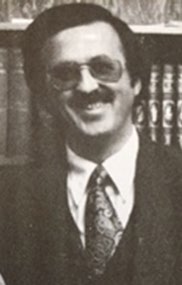
David was a remarkable teacher who made students think. He taught classes at Otter Creek when we first began attending in the late seventies. The class was always full. He once mentioned in class the difference between objective truth and subjective truth, which I knew as a teacher of literature but had never applied to my study of the Bible. That distinction made Bible study clearer as I taught ladies’ classes. I now saw, as Dr. Sue Berry had said about Tennessee Williams’ The Glass Menagerie, “Some truths are truer than true.”
When Otter Creek was in a preacher search after Carroll Ellis left, men of the congregation filled in. David had been accused in the past of not using enough Scripture when he taught. His response was to memorize the Sermon on the Mount for his Sunday sermon. On the way home from church, our son Reid, who was about six or seven, said, “I think we should hire him. I understood everything he said.”
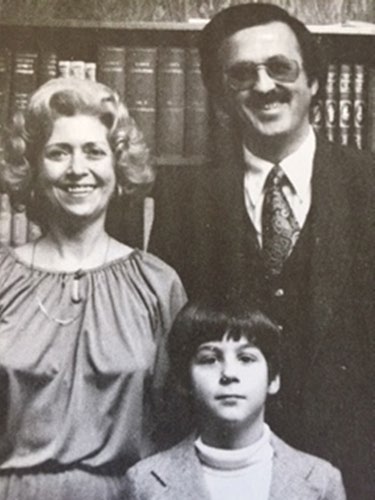
Whether or not it was always his nature or the consequence of losing his two-year-old son, David had a deeply compassionate spirit, a genuine understanding of suffering and grief. He was a grief counsellor for a number of years. He was always robust, outgoing, accepting, and warm—a loving, gentle husband and father.
Roy Hamley told me that when he was thirty-three and David was thirty, he was in a class David taught at Lipscomb. Students, he said, were on “the edge of their seats.” So was he. That class changed Roy’s life because he went into psychology and later taught psychology at Lipscomb until, if I remember correctly, he was eighty.
Ralph Samples was in the hall on the way to class when someone asked him if he had heard anything about the Martins’ little boy Damon. Ralph knew nothing at all. When he learned the boy was in the hospital in critical condition, Ralph told the secretary to cancel his class and went to the hospital. David met him and said that he wanted Ralph to preach Damon’s funeral. Ralph said not to talk about that, but moments later the doctor came with the sad news that Damon had died. That funeral was the hardest funeral Ralph had ever preached. David, Auline, Ralph, and Mimi became close friends, eating together regularly through the years.
…Harris, Derek’s friend of forty years told how David had passed a woman crying by the side of the road and turned the car around to see what was wrong. She needed to get to Cincinnati and had no money. David bought the bus ticket and sent her on. Derek and his friend confirmed that that simply was the way David was—compassionate and generous to everyone. …Harris said he had talked with David for forty years and always found him non-judgmental.
The Lipscomb chapel prayer David prayed upon the death of Martin Luther King, April 5, 1968
Our Father, we come before you today with saddened hearts. A prophet of love and non-violence in a world full of hatred is dead. Bind up the wounds of his grieving widow and orphaned children. To those of his race who loved him as their Moses, help them remember that just a few days ago he said that he had been to the top of the mountain and had seen the promised land.
Now is the time for those of us who remain, both black and white, to join hands and cross over the Jordan. Together, we can enter the land where freedom rings—the land where we can say, “free at last—thank God Almighty—we’re free at last.”
In the name of Him who died that all men might be free. Amen.