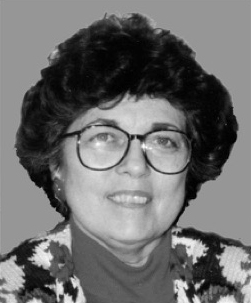
Meador, Prentice
MY FRIEND PRENTICE by Jerry Collins
I have known Prentice Meador all my life. Our parents were close friends. We attended the same church, Hillsboro Church of Christ in Nashville. His father and my father worked for the postal service. To me, his father was Big Prentice or Uncle Prentice and his mother was Aunt Margaret. He was Little Prentice or “Little ‘un”.
Batsell Barrett Baxter baptized Prentice; I believe he was nine. I was later baptized by Brother Baxter myself. Young Prentice would sit on the front row at the old Hillsboro church, often by himself, full attention on the speaker. Later his sister Linda would occupy the same seat.
Prentice’s mother Margaret was a Bible class teacher and later a fourth-grade classroom teacher at Lipscomb. I have a picture of her and her 1950 VBS class of us nine-year-olds. In that picture I was the student immediately behind Margaret, making a sour face to “ham it up” for the camera.
Big Prentice quit smoking so their family could have the money for Little Prentice and later Linda to attend Lipscomb. He had contracted tuberculosis earlier and spent some time in the sanatorium, so that may have also been a factor.
My father and Big Prentice worked with fellow railway mail clerks Ernest Ferguson (Fergie) and Ralph Smith (Smitty) and Roy Weedman. Roy’s son Danny has had a distinguished career as an astronomer at Vanderbilt and other places, lately Cornell. Fergie and Virginia had a son Morris Dean, who I think has been in family practice in Lebanon. Smitty’s son Terry lives in Brentwood. We would all tag along on occasion with our dads when they would play. Their jobs necessitated that they would be in a mail car for six nights in a row, up from Nashville to St. Louis one night, back to Nashville the next, to St. Louis the next, and so on. Alternate weeks they would study routes, prepare materials for the next week, and in several cases work at alternate jobs. I suspect our fathers all encouraged us to do well in school so we would not be as likely to face the difficulties they had faced during the Depression. Life “on the road” was not easy, but jobs were scarce.
Big Prentice was a sports enthusiast and according to my dad quite an athlete. He was an amateur boxer and had thick, strong blacksmith wrists, like Arnold Palmer’s. (I suspect that clamping thousands of mail bags shut had made his and my dad’s wrists strong.) My father told me that Big Prentice drove the ninth green on McCabe’s middle course one day. That’s a prodigious shot, with 1940s balls and clubs. I played there earlier this year, hit a good drive for me, and was still 100 yards away. When Big Prentice finished that hole, he put his golf clubs away and did not play again until many years after his retirement, according to my dad. It was as if he was saying “That’s the best I can do. Now I have other priorities.”
Little Prentice was a leader, student body president, and avid athlete at Lipscomb High School. He played shortstop on the baseball team and was an undersized but resourceful front court player in basketball. In his senior year he was featured in the local paper’s sports section for having made many free throws in a row—perhaps thirty or more.
Prentice was proud of his nickname “Ace”. Others of his friends wanted it also. He found in a Latin-English lexicon the Latin word “acies” (AH-kee-ace) which means “edge” or “sharpness”. He showed me the word to demonstrate his right to the nickname, pointing to his sharp chin as he did so.
Sports were definitely family affairs in our circle. High school home games were played in McQuiddy Gym, and many parents of players and other students sat in the north balcony at the end of the court. Win or lose, final approval
of a job well done came from parents such as Lewis Morrell, Fred Zapp Sr., Big Prentice and my father. My mother kept up with my scoring totals with tally marks in a little book she kept. I suspect she was not the only one.
Although at times they could be critical if they thought we were not doing our best, our parents were proud of us and expressed it. My wife Sandra called the mothers “son worshippers”. Margaret Meador was by any measure the high priestess. Once Fletcher’s mother told him “I hear Barbara and Prentice are just doing really well.” Fletcher: “You’ve been talking to Margaret, haven’t you?” Mother: “How’d you know?”
Before our first varsity basketball game his senior year, against Father Ryan, as co-captain Prentice led the team out of the locker room after the coach’s pep talk before the game with “Let’s tear ‘em up, gang!” Only—his palms were too sweaty to get the doorknob open, and Jim Carothers, one of the student trainers, had to bring a towel to dry the knob and open the door. (We lost by plenty. Ryan’s Lou Graham, who would eventually win the US Open golf championship, was not only the best high school golfer that year but also one of the best basketball players.) Jim laughed with us as he opened the door.
That was not the last time that Jim would laugh at Prentice in a sports setting. In the summer of 1958 the best sports deal in Nashville was the City Open golf tournament. For $3 a golfer could play a total of four rounds, one each at Belle Meade, Richland, Bluegrass, and Old Hickory, the four best courses in town. Prentice’s future brother-in-law Stan Morrell, classmate Jim Perry and I played in the Reverse Division (higher handicap) of the tournament, each day on a different course from that played by the Main Division. Prentice and college classmates Fred Zapp and Buck Thorogood signed up together, and because Buck was on the Lipscomb golf team and a good golfer, were assigned to the Main Division. The first day they played at Belle Meade. A large gallery surrounded the first tee to watch the talented golfers tee off. Most golfers had caddies. Not to be outdone, Prentice had asked Jim Carothers to caddy for him. On the first tee, golfers sent their caddies ahead 230-240 yards, where a good drive was likely to land. Buck, Fred and Prentice sent theirs ahead as well. Buck sent his drive out a good distance to the applause of the gallery, and Fred got off a good drive as well. Prentice, with several hundred watching, topped his drive about thirty yards. I don’t know whether the gallery was laughing or sympathetically silent as Jim made his way back to Prentice. I know that Jim was laughing. Prentice said later that week, with enjoyment and appreciation, that that was one of his most embarrassing moments.
During Prentice’s college years, a plaster bust of a fierce-looking bearded man was shipped to the Lipscomb administration from a farmer in southern Kentucky who identified the bust as that of William Anderson, an early president of Lipscomb. The gift was gladly received and formally acknowledged in a special assembly which the local paper covered. Next day it was revealed that the “farmer” was actually Prentice and five other student leaders at Lipscomb, and the bust was of no one in particular. A second newspaper article covered that story the next day. The anonymous bust resided in art professor John Hutcheson’s studio for many years.
During those college days, Lipscomb and Austin Peay State College had a big basketball rivalry, The Game of the Torch. The previous year’s winner was allowed to relay a torch to the campus of the other, and the winner would get to keep the torch for a year. When Prentice was a junior, Austin Peay was running the torch to Lipscomb when a group of Lipscomb students intercepted the torch, hid it, and presented it at halftime after Austin Peay had tried to pass of a replacement before the game. Lipscomb won the game and had the responsibility of running the torch to Clarksville the next year. Prentice, student body president, accompanied the torch. Just outside Clarksville, the convoy was met by dozens of AP State students, who trapped Prentice and others inside their cars and damaged several. Prentice had the onerous task at the game of sitting with AP State officials and identifying the perpetrators.
During the time Prentice was in college, he preached at the Gladeville Church of Christ outside Nashville. On more than one occasion he invited me to go with him and lead congregational singing, which I was not particularly good at but was glad to do.
I remember how he and Barbara looked at each other during their wedding vows at Franklin Road church in 1960. It helped me to realize how serious their marriage was to them. Regardless, a group of Prentice’s friends (don’t ask me how I know) were planning to kidnap Prentice during the wedding reception at Belle Meade Mansion. As one of the would-be pranksters made a move in the reception line, he was seized and his arms pinned in a vise-like grip. He squirmed around to see who had him as he heard the words “Boys, let’s not spoil a perfect evening” from Batsell Barrett.
Fletcher Srygley and I made a train trip to Chicago in 1961. On the way back we stopped at Urbana and were warmly welcomed by Prentice and Barbara. Prentice met us at the station with “Barbara made a cake!” And so she had.
During the Christmas holidays, the Meador family would host a get-together for Prentice and his friends, many of whom had arrived back in Nashville from graduate school for Christmas break. That occasion was profoundly enjoyed. Old jokes were repeated with great glee out of Prentice’s mother’s hearing, especially if it was imagined that they might offend her in some respect. We would interrupt the telling with “Oh, hello, Mrs. Meador”, which would bring an abrupt halt to the telling but intensify our silent laughter until our sides ached, or until Margaret left the room again.
One Christmas Tad Wyckoff had a part-time job at Cain-Sloan’s, and access to the price tag machine. We printed a $200.25 tag, affixed it to the cheapest plastic dish we could find, wrapped it, and gave it to Prentice during our gift exchange at the Meador house. To our “chagrin” we discovered the price tag still on the gift as Prentice unwrapped it. He laughed loudest of all.
The summer after, Tad appeared one afternoon at my father’s appliance store, where I was working. He was euphoric. He had interleaved, in the lobby of Granny White Church, copies of the now-famous flyer for the Gospel Advocate Joke Book and the Gospel Advocate Record Book in stacks of the handouts for the Lipscomb Summer Lectures attendees. They had been printed by a here-nameless friend who had a night job at a printing company. There is no direct evidence that Prentice was involved in this particular activity, but this fall he laughed about it with Fletcher and me. Humor was undoubtedly written into his DNA.
When I decided to go to Purdue University to graduate school in 1962, I had little knowledge of churches of Christ in that area. I knew that Prentice was preaching in Bismarck, Illinois, about 50 miles from Lafayette, Indiana, and thought that at the worst I could drive to Bismarck. In spring 1962 I met Joyce Gerald, a student at Lipscomb from Lafayette, and found out just how rich the church fellowship at Lafayette was. Sandra and I met at that church and are indebted to God for leading us there. But it was still comforting to know that Barbara and Prentice were a short distance away.
Music was a part of Prentice’s life he particularly enjoyed. Some of that music has recently reminded me of Prentice.
In late fall 1962 Prentice came from Urbana to Lafayette, Indiana, where I was in graduate school, for a visit. I had just obtained an album of Christmas music by the Roger Wagner Chorale. On that album was a spiritual-- “Sweet Little Jesus Boy”-- I had not heard before. Prentice and I listened to it in my room. At the December 2008 Tokens Show on the Lipscomb Campus, Tricia Walker sang a moving version of the song.
Later that evening Prentice visited the Elmwood Avenue church with me, and sang in practice with our singles’ chorus. One of the songs we sang was a version of the eighteenth-century hymn “O Thou in Whose Presence.” Sandra and I still have a recording of that chorus and that song. I still hear Prentice’s strong, clear voice:
O Thou in whose presence my soul takes delight, On whom in affliction I call, My comfort by day and my song in the night, My hope, my salvation, my all.
More than fifty years ago, Prentice was a member of a Lipscomb chorus who sang Isaac Watts’s rendition of the 23rd Psalm “My Shepherd Will Supply My Need” to the old tune “Resignation.” I remember Prentice and other members of that chorus as they sang that song, and had been thinking of it over the last few weeks. Then to my delight I heard a young people’s chorus present the same music, the same a cappella arrangement, at the service at the National Cathedral the day after the President’s inauguration. It blessed me again then as it has for over a half century.
Prentice was trained as a classical rhetorician. He used his knowledge of the classics and his speaking ability to speak boldly for God. I exchanged E-mail with him on Tuesday November 18 2008 about a message on revival he delivered at Otter Creek a few weeks before. I sent him a reference on the significance of Ezekiel’s story of dry bones (which he used as his text) as a reference to the development of spoken language (God will put his breath—vowel sounds—
into them so they will live; so YHWH became JEHOVAH). He thanked me and said he hadn’t seen the reference before. He closed his reply: “I’m enjoying preaching at Otter Creek.” Later that day he said he couldn’t open the attachment and asked me to bring it to Otter Creek Sunday. On Thursday the 20th he became ill.
One of Prentice’s blog pages describes him as “husband, father, brother, friend, child of God, and preacher of His Word”. I remember him also as Megga’s grandson, Prentice and Margaret’s son, and a proud grandfather, as well. His memorial pages are filled with testimony from many in validation of the many facets of his life.
Prentice was more. He was an integrator. Prentice spoke out in church circles in favor of racial integration long before it was fashionable to do so.
Barbara and Prentice had also been integrating the teaching of ethics into a course in her profession of nursing, and in so doing have given a meaningful answer to the existential question “So what?” I believe their work was/is Kingdom work. I also believe that God has additional work for the resurrected Prentice to do in restoring the Kingdom, and for all of us who “love His appearing”. We have something to look forward to.
Prentice was by many measures one of the great preachers of the day. He has preached thousands of sermons; I have heard relatively few. Two stand out as bookends.
In 1975 I flew from Lexington KY to South National Church in Springfield for the Mid-America Mobilization Seminar, a gathering of 1000 campus ministry students. That seminar was organic in the development of the Southside church in Lexington. The next year, I brought four students with me, and two years after that a charter bus brought forty Lexingtonians to Springfield. In 1975, Prentice spoke on the Old Testament theme “Where Is Your Isaac?” Who stands between you and your allegiance to God? Nothing, not even your precious son, is worth it.
Thirty-three years later, Prentice’s sermon at Otter Creek in November 2008 described Jacob’s encounter with God, during which Jacob became Israel. After thirty-three years, the texts and message had not changed. “I want to be a man of God…I want young people who are close to God…I want a church who will commit to a God alone…really, truly commit themselves…no one else…you shall have no other gods before me…remember your commitment to Jesus…Go back and get that loyalty…I call on you to smash any foreign god…let God change you…come to Him…He is God alone.”
Many of us were enjoying Prentice’s and his family’s interaction at Otter Creek. He was indeed a preacher, apologist, counselor (he and Barbara would counsel as a team so that there would be no possible question of impropriety), missionary. People around the world have been moved and convinced by what he said. But my appreciation for him is perhaps deeper and more profound.
Prentice was particularly appreciative of the great Christian apologist CS Lewis. He and Barbara were invited to attend a worldwide Lewis conference in summer 2008 in England, where Prentice presented a paper. Many people, including the long-time director of the Human Genome Project, Francis Collins, have been encouraged and led to faith by Lewis’s writings. Collins speaks with great appreciation in his biography The Language of God of how his own skepticism was addressed by Lewis’s accounts of his faith journey in Surprised by Joy, of his presentation of the faith in Miracles and Mere Christianity, and of the delicious ironies of The Great Divorce and Screwtape Letters. Many other believers have made journeys of faith in the company of Lewis. Sandra and I have given a copy of Mere Christianity to every Otter Creek high school graduate for years. As I contemplate the end of Prentice’s mortal life and the expectation of life beyond for all of us, I can think of no better prospect than that found in the words of Prentice’s beloved Lewis:
“You do not yet look so happy as I mean you to be.” Lucy said, “We’re so afraid of being sent back, Aslan. And you have sent us back into our own world so often.”
“No fear of that,” said Aslan. “Have you not guessed?”
Their hearts leaped and a wild hope rose within them.
“There was a real railway accident,” said Aslan softly. “Your father and mother and all of you are—as you used to call it in the Shadowlands—dead. The term is over: the holidays have begun. The dream has ended: this is the morning. And as He spoke He no longer looked to them as a lion; but the things that began to happen after that were so great and beautiful that I cannot write them. And for us this is the end of all the stories, and we can most truly way that they all lived happily ever after. But for them it was only the beginning of the real story. All their life in this world and all their adventures in Narnia had only been the cover and the title page: now at last they were beginning Chapter One of the Great Story which no one on earth has read: which goes on forever: in which every chapter is better than the one before. --C. S. Lewis, The Chronicles of Narnia: The Last Battle
I believe Prentice has been surprised by two things. First, hope. Surprised by Hope is the title of Bishop of Durham’s NT Wright’s view of the hereafter. There, Wright argues from Scripture, God will have work for resurrected Christians to do. John 5:24 was on the program at Prentice’s celebration. In that passage, Jesus says that believers have already passed over from death to life. Wright talks in his book of “life after life after death.” Paul talks about the whole creation groaning in anticipation (Romans 8). We grieve over personal shortcomings, but also with Christ at the sad situation man has pulled the world into. We have a chance to work with God to correct that. I like that. I never felt I had the right to sing the old African American songs about trials, or Mansion Over the Hilltop, but if I could have God’s Spirit reside in me so that I could help do God’s redeeming work, now that would be something. I can see Prentice, filled with compassion, helping God redeem his creation.
I attended Hillsboro church as a youngster, but some of my good friends, the Morrells, Jack Dugger, the Zapps, the Davidsons, attended the Franklin Road church. Shortly after we moved back to Nashville, we called Urby Davidson, the father of Randall, Warren, Wayne, and Walter, to help us with a plumbing problem. As he lay on the floor in front of our sink, our three-year-old daughter Erin was all over Urby, was in his way, was happy that he had come to see us. We were embarrassed and asked Erin to stop. But Urby reached in his tool kit, pulled out a big wrench, and asked Erin to hold it. He said “I never have trouble with children.” Prentice is holding God’s big wrench right now.
So I believe that Prentice has been surprised by hope. I believe that in the words of CS Lewis, he has also been surprised by joy. As Randy Lowry reminded us from Scripture at Otter Creek the week of Prentice’s death, “But as it is written, Eye hath not seen, nor ear heard, neither have entered into the heart of man, the things which God hath prepared for them that love him.”
Prentice was also a joy-giver. Beyond sermons, beyond words, Prentice’s joy in friends and family and people, and his compassion, spoke to me. Beatrice Clelland said it well:
Not only in the words you say, Not only in your deeds confessed, But in the most unconscious way The Christ expressed.
Is it a beatific smile? A holy light upon your brow? Oh no, I saw His presence when You laughed just now.
To me it was not the truth you taught, To you so clear, to me so dim, But when you came to me you brought A sense of Him.
And from your eyes He beckons me, And from your lips His love is shed, Till I lose sight of you and see The Christ instead.
Moon, Bea
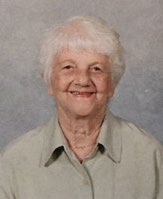
Comments by Sandra Collins…I did not know Mrs. Moon as well as I should
have. I had heard that at age seventy-five she had never owned a Bible, that she began coming to Otter Creek because of the experiences she and her granddaughter had had with Otter Creek Kindergarten, and that she was baptized not long after that. She became a regular volunteer at the Wayne Reed Center and the teachers loved her. Patricia Simpson made sure she got there.
Her son-in-law was either the editor or publisher of USA Today. When we learned that there was a foundation I could approach, I sent a request and the Gannett Foundation gave the Wayne Reed Center 10,000 dollars.