Rucker, Ruth
Obituary…
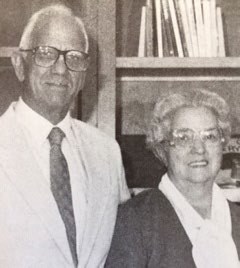
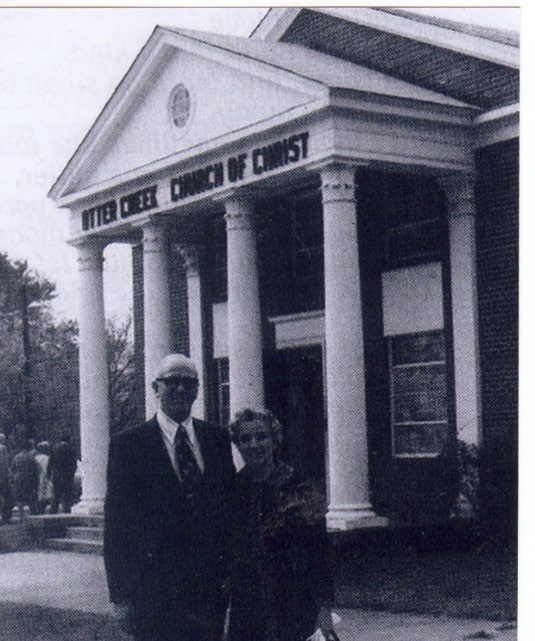
Ruth Cunningham Rucker, of Nashville, Tennessee, went to meet her Lord on January 16, 2007. She was born on November 7, 1913, the youngest child of the late Furm and Jackie Cunningham. Ruth graduated from David Lipscomb College in 1933 with an Associates Degree and from Peabody College in 1962. She became a founding director of the Otter Creek Kindergarten and Preschool, where she was recognized for her unusual understanding of children. She served in this role for 24 years and later directed the Berry’s Chapel Church of Christ’s Kindergarten. Ruth and her husband John have been active members of the Otter Creek Church of Christ for 70 years. Their impact on the people of Otter Creek has been profound, lasting, and Christ-like.
Ruth was preceded in death by five brothers: J.P., W.L., Elbert, Roy, and Luther Cunningham. She is survived by her husband of 72 years, John W. Rucker; sons John W. (Mae) Rucker, Jr., Ed (Joyce)Rucker, Tom (Gina) Rucker, and Dan (Amy) Rucker; daughters Mary Carol (Wayne) Estes, and Evelyn (Ron) McFarland. There are also three foster children: Mary Ruth Gammon, Leatha Shiano (deceased), and Anthony Shiano; sixteen grandchildren; and twenty great grandchildren. She will be deeply missed by all her family members, her church family, and the many friends who knew her heart—especially the children she has served so long and so well.
Honorary Pall Bearers: all those who have served as elders for the Otter Creek church of Christ, Glenn Huff, and Tom Cook. Pall Bearers: Grandsons. Minister: Tim Woodroof, Otter Creek Church of Christ pulpit minister. Music: Brandon Scott Thomas, Otter Creek Church of Christ music minister. Speakers: Pat Ward, Director of Otter Creek Kindergarten; Sandy Collins, friend; Carolyn Maddux, friend; and Ron McFarland, son-in-law. Memorial gifts may be made to the Otter Creek Kindergarten. Graveside remembrance at Woodlawn Memorial Park, 660 Thompson Lane, Nashville, TN.
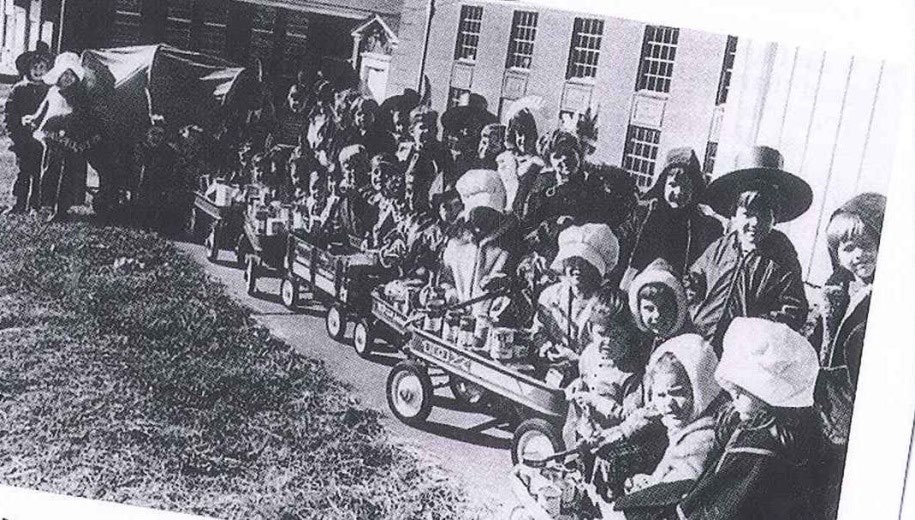
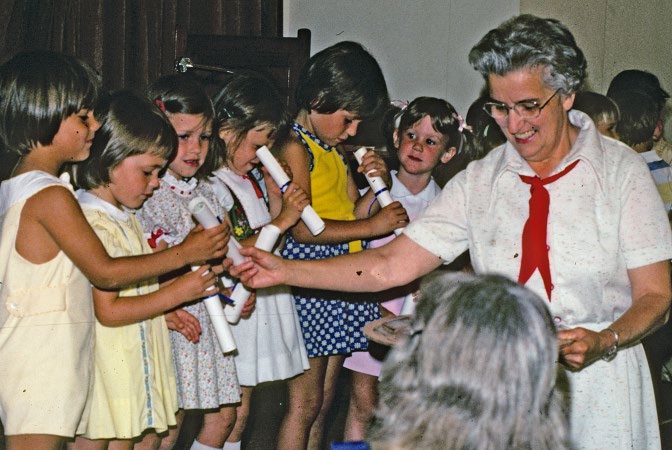
Ruth wrote the story of the Otter Creek Kindergarten and Preschool—Joy in the Morning—to help raise money for the Wayne Reed Christian Childcare Center. The picture on the left is one of the innovative events that caught the eye of the newspaper. Children and teachers dressed as settlers took a covered wagon trip from Otter Creek church t Mrs. Campbell’s house down Otter Creek Road, loaded with canned goods and other food.
Comments by Carolyn Maddux
Paula Franklin and I were in the chemo lab at Vandy when we got that call. We rejoiced that she had gone home with her Lord—a journey she had prepared for eighty-plus years. Ruth had those great concepts of God and love worked out. She loved God and people and was secure that they loved her. So many of you were her best friends. Remember Ruth talking about the Holy Spirit? How she had the gift for years before she opened the package?
So many Ruckerisms. Ruth quoted John—God doesn’t have grandchildren. Authority is like money in the bank: the more you use it, the less you have. Wonderful faith.
We shared so many wonderful times: crowd of ladies at church, praying all night for the elders on retreat, and the church members at another great slumber party in that log house John built on Bobby Drive.
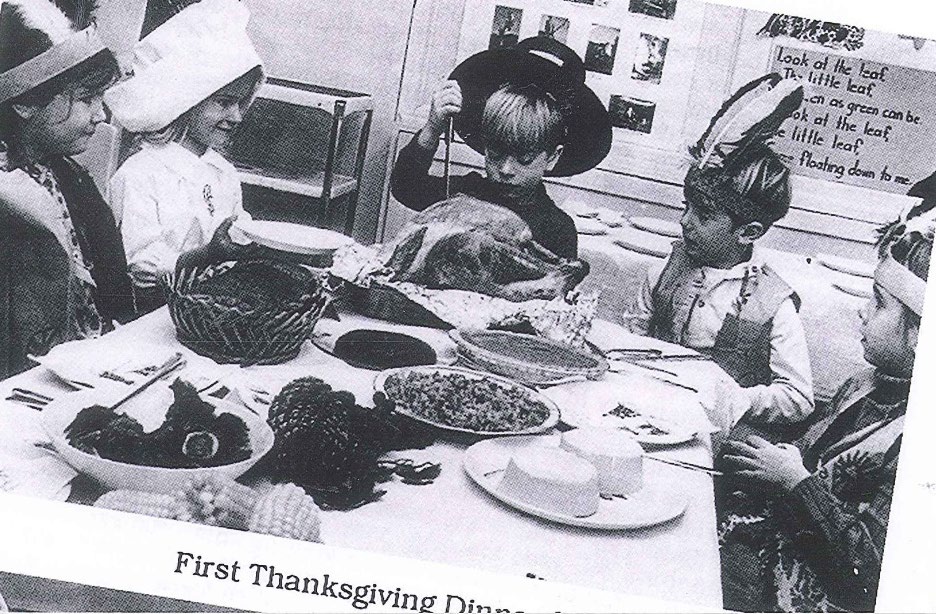
At kindergarten, she made soap in an iron pot outside over an open fire, stirring bacon fat and lye, making bars of lye soap for the kids to take home.
At Thanksgiving, kids brought food items. She led us and our loaded red wagons down Otter Creek Road to Mrs. Campbell’s house. We crammed in her tiny living room to hear her tell how this church started in that very room, when Brother Campbell went out in his school bus on Sunday morning and brought kids home because they had never been to Sunday School. One little boy said he had been to a funeral once but it wasn’t much fun.
My close relationship began in 1970. I had married into the eldership—a bride with eight kids (five Forristers and three Madduxes). She had eight also—six Ruckers and two adopted (Anthony came later). With all those kids in so many years, she had accumulated a lot of wisdom. She related well to my Vali because she had grown up the youngest and the only girl in a houseful of boys.
Ruth was good at conflict management.
Any accusation, and she would say, “I probably did. It sounds like me.” She wouldn’t fight. She would not gossip. “Don’t tell me. I have a poor memory, and I’ll forget if I’m supposed to forget it or tell it.”
I remember when she broke the pants barrier. We taught kindergarten in pant suits but dared not wear them to worship. One Wednesday night, I came in to the north vestibule with Frank, and there was Charlie Brandon with John and Ruth. She was wearing her pan suit, just as she had to school that day. “You did it!” I said. She said, “We were running late. John said that we needed to leave right now. ‘Right now—like this?’” John said yes, and Ruth walked out to the car. I said, “Wow.” Charlie asked, “What are they talking about?” John said, “I have no idea.” He still had not noticed Ruth had on slacks. Later she remarked that since the pant suits we wore had tops as long as the fashionable miniskirts, if there were problems with pants we could just take the pants off!
It wasn’t just church and kindergarten. It was also camping. Frank and I and four or five kids pulled a pop-up camper following John and Ruth and their trailer and his two or three kids for thousands of miles. We went to New England twice, Savannah and Delaware, Florida, and the Tetons.
In Vermont, the kindergarten benefited. We sent home a couple of marvelous maple horse swings, a push-pull affair that two kids could ride. While in Canada we saw an Indian jamboree--all the Indians in Western Canada. When we got home, it was not long before the kindergarten had a teepee. We painted it ourselves. It was big enough for a whole class of kids and their parents.
We made a tire dragon for kids to climb on, huge and small tires bolted together, twelve feet high and thirty feet long. We had a boat on chains that could swing when twelve kids were disciples and Jesus stilled the storm.
Folks often go Frank and John mixed up. Once, Frank said, “John, I don’t remember making this picture, but there you are.” John said, “No, Frank, I made the picture. That’s you.”
Ruth and I could always tell. Our best friends—John and Ruth.
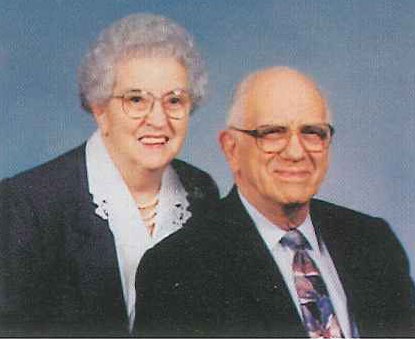
John and Ruth
Comments by Sandra Collins
…Treasures in Jars of Clay
In Sarah, Plain and Tall, Sarah refers to her elderly aunts back in Maine as The Treasures. Otter Creek has some people I often refer to as The Treasures.
When Jerry and I moved to Nashville in1977 with three young children, I came with the feeling that parenting children was a mystery that few people understood and success came with the luck of the draw. At Otter Creek, however, I discovered families with several generations of faithful children. And, I met John and Ruth Rucker. (Jerry already knew the Ruckers. Ruth had given Jerry his first bath.)
I soaked up every word that I heard from the Ruckers and would tell their stories over and over to classes I taught in various churches here and in other states. Although I had heard supposed words of wisdom from pulpits and parents, when John and Ruth spoke, their words had authority. Their words rang true in ways that no other advice ever had. Those words saved our children from my bungling. I regret that so few of our present Otter Creek family have had the privilege of sitting at their feet. Ruth was the first woman I had ever known in the Churches of Christ who taught a class of both men and women. John was at her side, but she was the primary teacher.
And the proof of their wisdom was in the Rucker children and grandchildren: sons who are elders, daughters who are wives of preachers and elders; children and grandchildren who speak lovingly and often of Mama and Papa and have their own wonderful stories of home life, as well as a daughter-in-law who said just this week, “I don’t know what would have happened to me if I hadn’t come into the Rucker family.” And there were three foster children reared in addition to the six of their own, even while John’s mother and Ruth’s father shared the crowded home on Grandview Drive.
Some of those wise words are burned into my memory: “Authority is like money in the bank. The more you use it, the less you have.” Many times when I wanted to reprimand or lecture, those words would rise up and stop me. Vivid stories revealed the myth of control, the foolishness of attempts to change behavior without shaping hearts and wills. You have heard the quintessential story--the one about the four-year-old who was told to sit in his chair, to sit on his bottom, to please sit on his chair, and then was gently pushed down on the chair, only to have him say, “I may be sitting down, but in my heart I’m standing up.”
Other meaningful stories abounded. Eddie had been threatened with a knife by a boy at school. “I should just show him, shouldn’t I, Mama? I can show him,” even though he knew how she felt about fighting. Ruth answered simply, “God will show you what to do.” Eddie came home later to say that he had seen the boy behind a door, sitting on a chair waiting for him to come out of a room. He had picked up the chair with the boy in it and had carried both to the principal’s office. His mother had been right once again. Eddie himself told the church why he had never had a problem understanding grace: he had experienced it from his father. He had played soldier in the garden cutting down corn (Indians, enemies) with a sword (stick) while Papa was away. When Papa came home and saw the decimated corn, he had taken Eddie aside quietly, put his arm around him and talked to him tenderly, mercifully.
As many but not all of you know, Ruth began the Otter Creek Preschool and Kindergarten program when no other churches of Christ in Nashville had such a program, and not necessarily with the approval of those other churches. Dan, now an elder at Hillsboro, was just a baby. Even though she believed young children should stay home with their mothers, she said, “Those mothers are going to put them somewhere, and I’d rather have them here than anywhere else.” John says this is when she became the woman we all love and admire so much, when she came into her own. The success of the program is renowned city-wide—always a waiting list, many of the present parents having been children in the program in those early years. When she retired from Otter Creek, she went to Berry’s Chapel to head their program, with equal success. In a class where folks were asked to tell what they wanted written on their tombstones, Ruth said, “She hath done what she could.” Indeed she has and exceedingly abundantly beyond that with God’s help.
In 1995 when the elders asked that some of us come up with a single focus for inner city ministry, a task force was formed from volunteers. Among that group were John and Ruth. The idea of an inner city childcare program that attempted to replicate the Otter Creek preschool for urban children appealed to them. One evening John looked at me seriously and said, “Are you committed to seeing this through?” I said I was, and he said, “Then I am behind you all the way.” And both he and Ruth were behind us to the point that in her eighties she wrote a book about the OC kindergarten, called Joy in the Morning, John had it published, and all the proceeds went to the initial fundraising efforts for the Wayne Reed Christian Childcare Center.
In addition to remolding the way I treated my children, Ruth’s words shaped my understanding of how to deal with church issues. When a lady who had left Otter Creek called to tell Ruth she could now speak in tongues, Ruth did not argue or offer scriptural refutation as I might have done at that time. She said, “God has given you a wonderful gift. How will you use it for Him?” When someone called to gossip about the Belmont Church that several OC members were now attending and ask Ruth’s opinion, Ruth said, “You know, I keep so busy here at Otter Creek that I don’t have time to bother with what is going on at other churches.” Even in the last year, when John asked the seniors class, “How do you know when you have given enough? I keep getting all these requests for money through the mail. When do you stop giving?” Ruth, sitting in her wheelchair, not having spoken up to that point, said, “When there is nothing left to give.”
Jerry and I offered a class in our home the first or second year we were at Otter Creek, a class using The Intimate Marriage by the Clinebells as the study guide. It was a great book on marriage and we wanted to share it with the less knowledgeable. Who came? Doug and Nan Smith, Frank and Carolyn Maddux, Ernie and Linda Hyne, John and Ruth Rucker. Who learned? Jerry and I. Here were men who led with towels and basins and women who were respected partners in the relationship.
A week ago John and Ruth celebrated their 71st anniversary. In the hospital, I watched as he kissed her tenderly many times, called her sweetheart, tried to make her comfortable. At home he had been trying to devise a way to move her to and from the bathroom easily because it was becoming increasingly difficult. He had pored through catalogs, trying this and that to make her comfortable, buying forty frozen dinners at a time because the portions were just right for her, baking banana bread, and making chicken soup. He has modeled for husbands everywhere the true role of the Christian husband, loving and serving the wife just as Christ loves and serves the church, with a towel and a basin. And she adores him.
In Raymond Carver’s short story, “What We Talk About When We Talk About Love,” two couples reveal their many grim and failed experiences with various relationships as they try to explain what real love is. As the day gets longer and the language more graphic, the speakers become more inebriated. Then the doctor tells of seeing an elderly couple in an emergency room, bandaged from head to toe. They had been severely injured in an auto accident. The old man was depressed, the doctor discovered, not because of the accident or his condition and even after he learned that the wife would survive. His heart was breaking because he couldn’t see his wife through the eyeholes of the bandages.
“It was killing [him] just because he couldn’t look at his…wife. Do you see what I’m saying?” Every time I taught that story, I thought of John and Ruth.
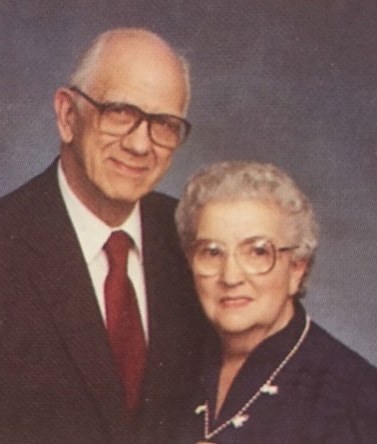
John was the first elder of the Church of Christ that I heard speak of the Holy Spirit as a person. It was in a Sunday school class during the first Sundays we visited at Otter Creek. Ruth told us that during the days when all her children and her father and John’s mother were crammed into their small house, she had suffered a breakdown. She was the first elder’s wife I knew who had been so open about her struggles. She then told us that she had never opened the gift the Spirit had given her until that time.
One time, she told us, John needed to go tell a wife that her husband had died. They knew the woman would become wildly emotional, so they went together. As they feared, the wife became hysterical. Ruth, if I remember correctly, put her arms around the screaming wife and said, “John, quick, we need help.” John did not go to the door. He fell to his knees and began to pray. Before long, the wife had calmed and was sobbing quietly.
My great appreciation of them has stemmed in large measure by the way they handle change, willing to move from their dream log house which John built to a condominium and from there to a duplex at the Meadows when most their age would refuse the changes. Over the twenty-eight years I have known them, when changes have occurred at Otter Creek, changes that split and splintered the congregation, grew the congregation, depleted the congregation, and altered all they had experienced in worship and service, they have hung on, sometimes saddened, sometimes hurt, but there nevertheless, when younger, less secure folk moved on to places that met their needs or agreed with their tenets. John and Ruth are not like oak trees that can fall given the right wind but like palm trees that can bend and right themselves. Their willingness to learn, yield, bend, but stay grounded is the attribute I most admire in both of them.
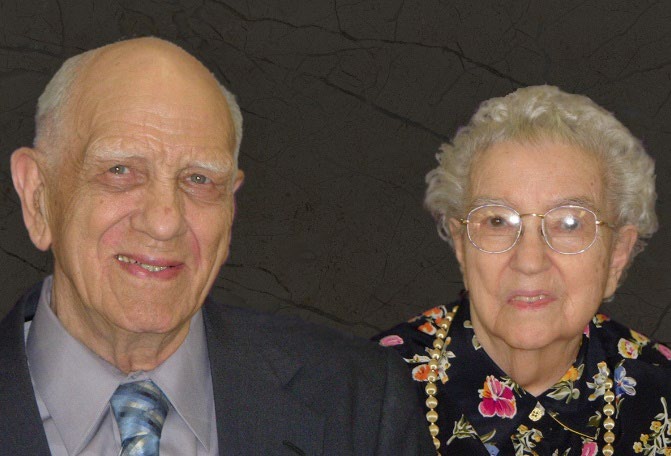
John the Apostle, according to tradition, had to be carried into church services in his later years. All he would say was “Little children, love one another” over and over. If you are around John Rucker very long you will hear him say over and over, “We need to have the mind of Christ. We need to have the mind of Christ.” These two dear friends, these treasures, have in them the mind of Christ. May their tribe increase.
A great story about John from Fletcher Srygley: “They’re Going To Kill Me”
Those doctors are going to kill me.
I was privileged to take John Rucker to Wednesday afternoon Bible class after he moved to Windlands and before he went to live with Ron and Evelyn McFarland in Murfreesboro. Evelyn was his daughter and she continued to make the trip to bring him to church on Sundays and class on Wednesdays.
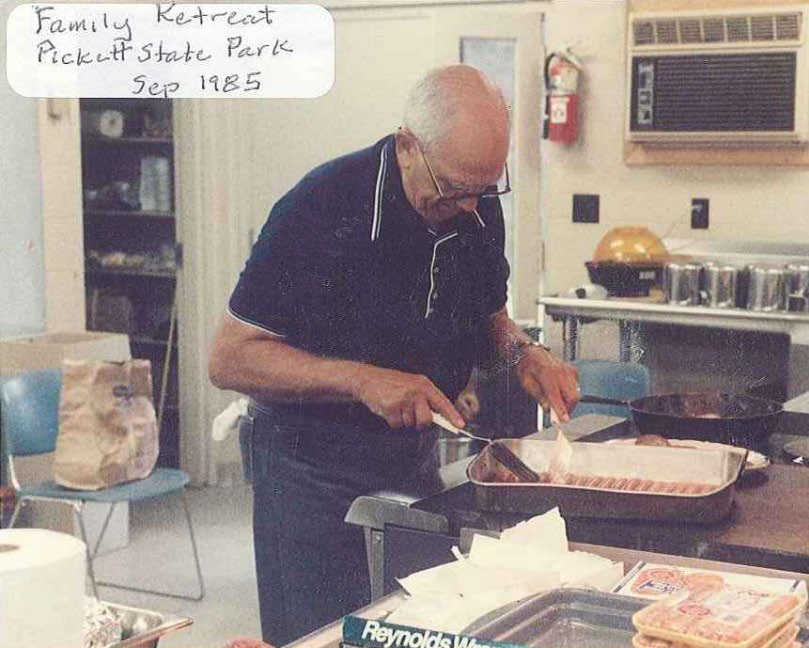
I think that John was fairly content those last years, although he missed Ruth…and driving. Several of us were somewhat concerned when John was driving that big town car from The Meadows in Bellevue where he and Ruth had a house to Otter Creek and then every day to Alive Hospice on Patterson Street to be with Ruth. He did not think that anyone else could be as careful feeding her as he was. He was probably correct. John was a great example of faithfulness as he ministered to Ruth during those last years. Love and those marriage vows meant something.
About the time he moved to Windlands Tommy “borrowed” the town car and drove it to Knoxville. I think John probably knew what was happening, and while at one level he did not like it, probably knew it was for the best. He probably knew that Tommy and others of his children had done just what he’d have done.
However…Jim & Ginger McAlister tell about picking John up to go somewhere after he’d stopped driving. Maybe it was foggy…at least dark. At some point Jim said, “I’m having a little difficulty seeing where I’m going.” To which John replied, “Would you like me to drive?”
One afternoon I picked John up at Windlands and he was really on his high horse.
Those doctors are going to kill me.
Several weeks earlier John had fainted at Otter Creek and been taken to the hospital. He had been treated there, given some medication, and released. I think that they may not have kept him overnight. He had been doing well since the incident that was probably related to his heart. Of course, the doctor who saw him was not his regular doctor. The prescription seemed to have worked. I think he had gotten it renewed at least once. The new prescription had arrived. This time John had looked at the information that came with it and read all the fine print that indicated all of the possible side effects—stroke, cancer, dizziness, upset stomach, shortness of breath, vomiting, skin rash…
Those doctors are going to kill me.
I half expected to see someone in a white coat with a shotgun approaching. Then I slowly began to realize that John had been reading the fine print. I asked him about that and as he calmed down he realized that the effects in the fine print were possibilities—probably slight—not probabilities, and surely not certainties. Just something that the pharmaceutical company was required to disclose. I think that we both could laugh about it, although I don’t believe he had a lot of faith in those emergency room doctors and wanted to be treated by his own physicians.
I was often privileged to take John Rucker to Wednesday afternoon Bible class. We had some good conversations. I used the time to ask him questions about Otter Creek history, his life, what he thought about all sorts of things. Sometimes, and for this I’m very glad, I took a micro-cassette recorder and have some of the history on tape. Unfortunately I don’t think that I have on tape Those doctors are going to kill me.
FDS—18 January, 2017