Arnold, Henry Ormand (Buddy)
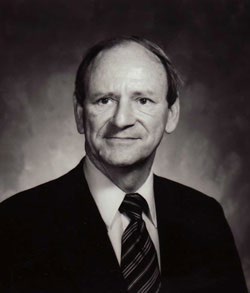
Music professor, critic Henry Arnold, Jr. dies
Henry Ormand “Buddy” Arnold, Jr., a longtime Lipscomb University music and theater professor and respected Nashville Banner classical music critic, died of a heart attack early yesterday morning at his Nashville home.
Visitation is 2-4 pm and 6-8 pm today at Woodlawn Funeral Home, 660 Thompson Lane. Funeral services, preceded by a one-hour visitation are scheduled for 2 pm tomorrow in Otter Creek Church of Christ, with burial planned for 10 am Tuesday in the Middle Tennessee Veterans cemetery on McCrory Lane.
Mr. Arnold, 77, was remembered yesterday by friends and former colleagues as highly knowledgeable in music and theater and especially gifted in communicating his fondness of both.
“His genuine love of music shone through in his expression of thought in class,” said Marcia Hughes, a 1968 Lipscomb graduate who is chairwoman of the university’s department of music. “He had a wide knowledge of music and could bring in little-known facts that would really impress upon students his depth of knowledge and love for the subject.”
Tennessean entertainment editor Tim Ghianni worked for years alongside Mr. Arnold when Ghianni was features editor at the Banner. Mr. Arnold reviewed classical music, particularly the Nashville Symphony, for the afternoon paper.
In later years, he did free-lance music criticism for The Tennessean.
“It was a pleasure to work with Bud. He was a knowledgeable critic whose writing enlightened and entertained,” Ghianni said. “Most of all, though, Bud was a genuine gentleman, a wonderful, joy-spreading human being.”
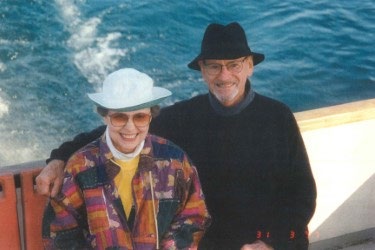
Born in Richmond, VA, in 1924, Mr. Arnold joined the U.S. Army and served as a paratrooper in the Pacific during World War II. Later he earned an undergraduate degree at Lipscomb and did graduate work at Peabody College and Indiana University.
In 1948 he began the first of two teaching stints at Lipscomb, where he specialized in music history and appreciation and directed various vocal ensembles, including the Choristers. One former Choristers member is Dennis Loyd, retired professor of English at Lipscomb. “He was always such a great encourager,” Loyd said. “You felt you were important in his presence.’
After teaching several years at Hillwood High School, Mr. Arnold resumed his work at Lipscomb in 1978. For years he served as worship leader during daily chapel sessions. He retired in 1989.
A longtime minister of music at Otter Creek church of Christ, he was also active in university and community theater. He often performed leading roles.
Survivors include his wife, Bernie Wyckoff Arnold, a longtime Banner food editor; a daughter, Nan Gurley, of Brentwood; and sons, Henry O. “Chip” Arnold III, of Portland, Bruce Crisman Arnold, of Nashville, Timothy Wyckoff Arnold, of Nashville; and nine grandchildren.
In lieu of flowers, donations may be made to the Wayne Reed Christian Childcare Center.
Celebration of Buddy’s Life at Otter Creek Church of Christ
June 16, 2002
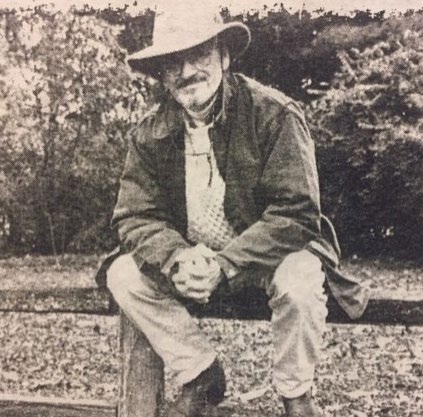
Page 2, Excerpt from Psalm 27
The Lord is my light any my salvation—whom shall I fear? The Lord is the stronghold of my life—of whom shall I be afraid? Though an army besiege me, my heart will not fear. One thing I ask of the Lord, this is what I seek: that I may dwell in the house of the Lord all the days of my life, to gaze upon the beauty of the Lord and to seek him in his temple. For in the day of trouble he will keep me safe in his dwelling; he will hide me in the shelter of the tabernacle and set me high upon a rock. Then will I sacrifice with shouts of joy;
I will sing and make music to the Lord.
Page 3, Liturgy
Pipes………………………………………..Jay Lawson Worship in Song…………………………...Jerry Jennings
Joyful, Joyful, Hallelujah, Praise Jehovah, My Hope Is Built on Nothing Less, and Praise to the Lord Congregational Reading…………………...Psalm 27 Prayer of Praise…………………………….Tom Holshouser
O Praise the Lord Military Service…………………………….Elliott Bales
In Memoriam……………………………….Nan, Chip, Cris, Tim, Wayne
Sing the Wondrous Love of Jesus, When Peace Like a River In Celebration………………………………Tim Woodroof Congregational Reading…………………...Romans 8 (on back page of program)
We are more than conquerors through him who loved us. For we are convinced that neither death nor life, neither angels nor demons, neither the present nor the future, nor any powers, neither the present nor the future, nor any powers, neither height nor depth, nor anything else in all creation, will be able to separate us from the love of God that is in Christ Jesus our Lord.
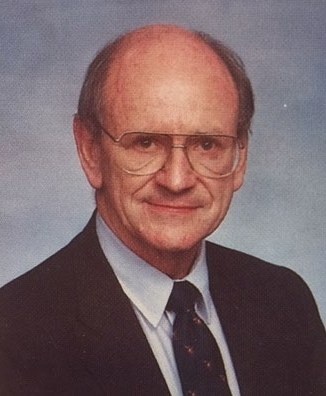
From a second obituary
Arnold, Henry Ormand, Jr.—Age seventy-seven. Departed this life June 14, 2002. His body could no longer sustain his spirit. Lovingly known to his family and friends as “Buddy.” His love and pride of his entire family knew no bounds. He left to cherish his memory his beloved wife of fifty- three years, Bernie Wyckoff Arnold; daughter, Nan Arnold Gurley (Wayne) of Brentwood; sons, Henry O., Arnold III (Kay) of Portland, TN, Bruce Crisman Arnold (Alene Weber) of Nashville and timothy Wyckoff Arnold (Margaret) of Nashville; grandchildren, Kristin Arnold and Lauren Arnold both of Portland, Erin Lin Gurley and Lena Jen Gurley, both of Brentwood, Tad Weber Arnold, James Henry Arnold, Elizabeth Jane Arnold, all of Nashville, Margaret Larie Arnold and Henry Landen Arnold, both of Nashville; sister-in-law, Nancy Jennings (Jerry) of Nashville; brother-in- law, Walter Wyckoff of Nashville; niece Melanie Jennings Bales (Elliott) of Washington, D.D.; great niece, Audrey Bales, great nephew, Hunter Bales, both of Washington, D.D.; nephew, Christopher Jennings (Wendy) of Nashville; great nephews, Haydn Jennings, Ryan Jennings, Ian Jennings, and Brennan Jennings all of Nashville.
Buddy served as a paratrooper during World War II and was awarded the Bronze Star after seeing action in the Philippines. His regiment was the first to land in Japan before the signing of the peace treaty.
He taught at David Lipscomb University for thirty-two years, directing both the music and drama departments and leading chapel singing daily. He was known and loved not only on the Lipscomb campus, but also in the Nashville Opera, Symphony, and theatre communities. He also wrote the classical music reviews for the Nashville Banner for a number of years. He served as minister of music for fifty years in several Churches of Christ in Nashville and also served as shepherd at the Otter Creek church of Christ, his home congregation….
Lipscomb news Lipscomb University has honored the late Buddy Arnold, known as one of Lipscomb’s most influential faculty members by generations of Lipscomb students, and his wife, Bernie Arnold, by dedicating the rehearsal hall in the Thomas James McMeen Music Center in their honor and establishing the Buddy and Bernie Arnold Scholarship in Theater.
The Arnolds: A Lifetime in the Arts
Henry O. “Buddy” Arnold (‘48) taught music and led various choral groups at Lipscomb from 1948 to 1968. After ten years as drama instructor at Hillwood High School, Arnold returned to Lipscomb in 1978 as professor of music and theater. He directed many of Lipscomb’s most ambitious drama productions (including 1776, Oklahoma, Man of La Mancha and Brigadoon) until his retirement in 1989. The rehearsal hall was dedicated to both Arnold and his wife Bernie (’48), who was an active presence behind the scenes, often hosting new students in the Arnold home and providing invaluable support for Lipscomb productions and its students.
Outside the hall, adjacent to Willard Collins Alumni Auditorium, passers-by can now view a permanent exhibit illustrating the rich history and value of the performing arts at Lipscomb, including photographs of several generations of student plays and music groups and a reflection of the Arnold family’s influence through the years.
Buddy and Bernie Arnold also had a major influence on the arts community in Nashville as well. Buddy Arnold reviewed classical music for the Nashville Banner during its existence and the Tennessean. He directed numerous productions for local school and community theaters, appeared as a soloist with the Nashville Symphony, and performed lead roles in Fiddler on the Roof, Camelot, My Fair Lady and many others.
Bernie Arnold was also an accomplished actress, singer, and writer both at Lipscomb and in the community, and worked as a food writer or editor at various Nashville publications including Nashville Magazine, the Nashville Banner, and the Tennessean. She was even dubbed “the Julia Child of the South,” on one occasion.
Servants at Lipscomb and Beyond
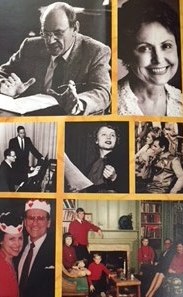
Jim Thomas, now professor of communication and the special assistant to the president at Lipscomb, recalled his first visit to the Arnold home when he was a student forty-two years ago. He remembers how the Arnolds’ hospitality defined his vision of Lipscomb as a place where people truly cared for one another.
“Buddy was this huge personality that made you instantly feel warmth. He greeted you like an old friend. He had a baby grand piano, and I was so impressed,” said Thomas. “Bernie was the most gracious hostess. I was so impressed with their graciousness and their true concern for the students there.”
He was perhaps best known to students, however, as the director of chapel singing. He began leading singing in church at the age of thirteen and is considered by many to be a pioneer of the worship leader concept, which recognizes the role of the song leader in establishing the assembled worship experience and makes that role an integral part of worship planning. His goal was to bring creativity to the act of worship and to inspire and encourage believers in Christ Jesus. He led worship at Otter Creek Church of Christ for more than thirty-five years and led worship in daily chapel at Lipscomb until his retirement.
All of the Arnold children -- Nan Gurley and Chip, Tim, and Chris Arnold -- attended a dedication ceremony earlier this spring, where they heard tributes from former Lipscomb students Wesley Paine and Jim Thomas; retired professor Fletcher Srygley; and Jerry Masterson, who spoke about Arnold’s involvement at Otter Creek Church of Christ in Nashville, where Arnold also served as the minister of music. “When I heard Buddy put together scripture readings and songs and tie it all together in a song service, I started to see what church could be and should be, rather than what I had thought it was,” said Thomas.
Comments by Tim Woodroof, June 16, 2002, for the Otter Creek bulletin
Henry Ormand Arnold (Buddy)…July 18, 1924-June 14, 2002
Physically, Buddy was a small man, though his military posture squeezed every inch of height from his frame. His body was small, compact, and spare. But that is the only way you could associate “small” with Buddy Arnold. By
every other measure, in every other way, Buddy was a giant, towering head and shoulders over almost anyone I’ve known.
The first hint of the largeness in him was his voice. This deep, booming VOICE would come out of that unlikely frame, surprising you at first, surprising you again from time to time though you knew him better.
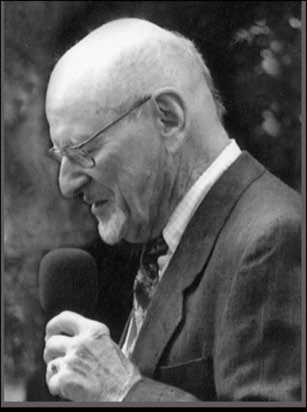
Buddy had a big touch. He could embrace you and make you feel enveloped by something vast and comforting. He could put his hand on my arm and I knew somehow, God was near.
He epitomized graciousness, that grandness of soul that allowed him to forgive and show mercy and set aside wounds and focus on others. He would speak kindly of people who’d hurt him deeply. He counted as true friends people who had not always behaved in friendly ways. His heart always seemed large enough for one more person. For a man with so many friends, he never made you feel that he had too many. There was room for me, room for you in that great heart.
As to the size of his soul…this was a man who devoted a lifetime to worship. Buddy loved to be in God’s presence. And that left its mark on him. His soul was wide and deep—the container stretched by so many fillings; the vessel enlarged by the One who lived in him.
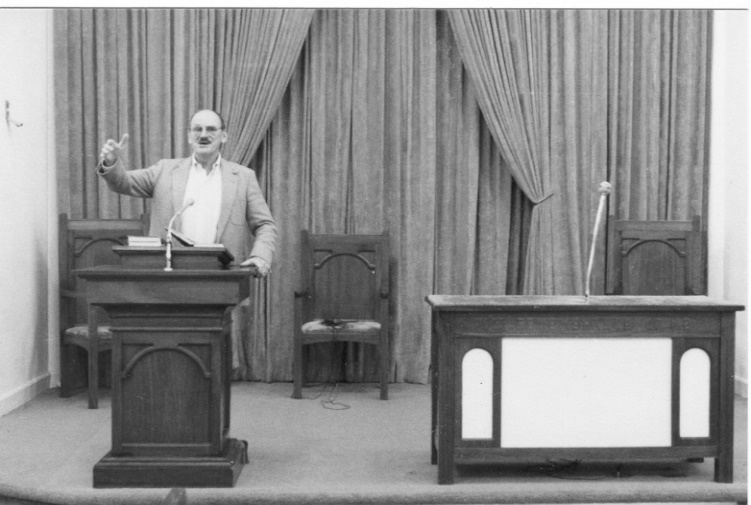
Do you want to know about the scale of Buddy’s soul? Talk to his life group, an assortment of older singles whom Bud and Bernie collected and forged into a family. Talk to Brandon about stepping into the role Buddy had filled for forty-odd years at Otter Creek, and the graciousness, the generosity of the support Buddy always offered. Talk to his fellow elders who saw his character and courage first hand and frequently. Talk to his wife, for whom he held such devotion that he would do more than die for her; he was willing to live each moment for her. Talk to his children who knew the blessing of a father who unselfishly, unreservedly loved them for themselves.
Many men are small. Few are great. Buddy Arnold was a great man. It will only take one person to fill his spot in the pew. But I know of no one large enough to fill his place in this church and in our hearts.
Comments by Sandra Collins
When AIDS was never mentioned in church or polite conversation, Bud Arnold would take new pajamas and personal products to hospitalized AIDS patients that had no other visitors. Bud didn’t mention his service, and almost no one knew. He brought an AIDS patient to a Wednesday night class once to let him tell his story. Although some in the audience were upset and expressed their concern, most were deeply moved.
The Nashville Banner told the story of how their classical music critic Buddy Arnold had been one of the “Angels” of the U.S. Army’s 11th Airborne, “who played a prominent role in the liberation of the Philippines.” The writer told how a very young Buddy had slipped off to Palm Beach, Florida, with $35 in his pocket to join the army. He told the army he had just turned eighteen.
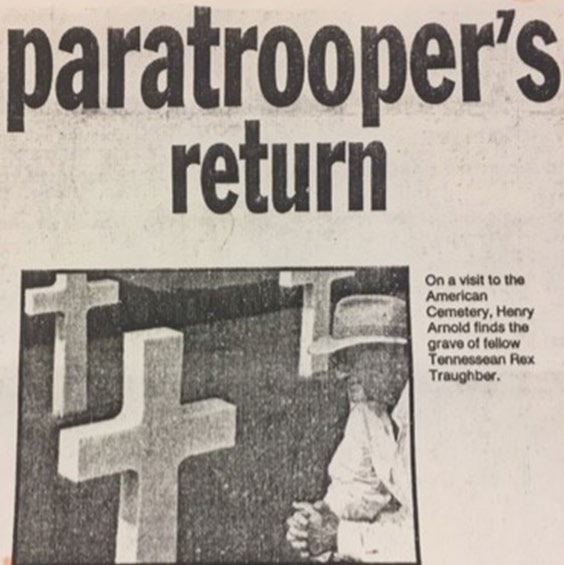
When his sons took him back to the Philippines on the fiftieth anniversary of his parachuting onto the islands, Bud located a Philippine gentleman he had known during the war. They enjoyed a tender reunion. While I could not imagine Bud holding or shooting a gun, one time he said sadly, “In order to shoot, I had to lie behind a fallen soldier so I would not be seen.”
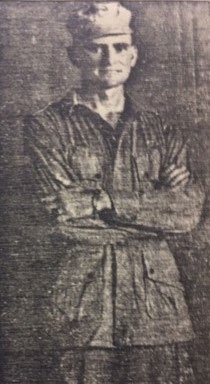
Bud played all the major heroes in American musicals: Camelot, Carousel, Fiddler on the Roof, Oklahoma, and others. He taught a congregation of three hundred to sing the “Hallelujah Chorus” so well that when Tony Ashe was there to preach, he stood at the end of the song and said, “I thought the roof would come off!” He produced worship programs that integrated the songs with Psalms and other scriptures thematically. Randy Harris once asked me to give him any programs that I had kept because he loved the thematic worship experience Bud always prepared.
He worked in commercials to make extra money, always being reassured that the commercials would never appear in the Middle Tennessee area. He played someone deciding to give up smoking. The commercial appeared in Ohio where preacher and Lipscomb colleague Marlin Connelly saw it. He played a recovering alcoholic and was seen in another state by his new daughter-in-law, who called Tim out of the bathroom and said, “I didn’t know your dad was an alcoholic.” Tim promptly called home. His dad reassured Tim he was not an alcoholic but added, “How do you think I paid for your honeymoon? Money from the commercial.” Locally, he played the husband of a hospitalized wife in an ad for the Methodist Church.
He never participated in organized sports, but he was very fit and athletic. He rode his bicycle from his home near Lipscomb to Hillwood High School for ten years, rain or shine, hot or cold, when he taught there. In later years he would hike the English coastline.
In ladies’ class Bernie once said to me quietly, “My children think I have grieved too long, that others get over this more quickly.” I answered, “Some women’s loss is not as great as yours,” and I meant it. He was a remarkable man.
Excerpt of a July 10, 2002, letter to Bernie from Carolyn Wilson
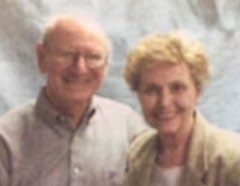
I have grieved for Bud as I have grieved for no other since my brother died. And in a sense, I still grieve for him. I have said so many farewells. It seems I am always saying them now, seeming to stand at the edge of loss attempting to retrieve something of a memory that still is human. I read once the tribute that Adlai Stevenson gave when Eleanor Roosevelt died, and it stayed with me. He said the things we remember when a great person dies are not their deeds, though we do remember them. We don’t mourn the deeds; we mourn the man, the mastery of life that made the greatness of the man. And that is how I mourn Bud.
We seem to live in a culture that does not allow space for grief. Take it. It takes much time and attention. I have a lot of good advice to “put it behind me and go on.” You have to do that to some extent, but I found that grief ebbs, but it does not really end. Death may end a life, but it does not end a relationship. At least it did not for me. Josephine Buffington, whom I admired and loved so much, told me soon after Larry died that it took a long time to feel you were not still married. I did not understand that statement for a long time. I understand it now, but I am not sure I ever passed that phase completely. I also learned this is a very individual process and it has to be done alone. But it can also be done with someone stepping beside you who without words knows where you are and how you feel and when you need to cry. I CAN do that.