Hutchinson, Ben
Comments by Janelle Shoun-Smith
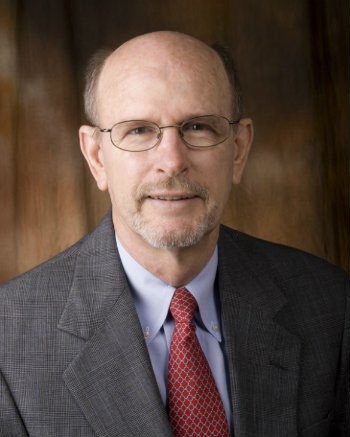
The Lipscomb community is mourning the loss of Dr. Ben Hutchinson, professor of chemistry and former dean of the College of Natural & Applied Sciences, who passed away Tuesday, Dec. 30. The memorial service will be at 11 a.m., Saturday, Jan. 10, at the Otter Creek Church of Christ.
Hutchinson came to Lipscomb in 2004 and served as dean of the College of Natural & Applied Sciences until it was merged into the College of Arts & Sciences in 2009. At that point, he became faculty in the Department of Chemistry and Biochemistry until the time of his death. His wife, Nancy Hutchinson, is a former adjunct professor in the Department of Communication and Journalism.
Hutchinson’s tenure at Lipscomb was marked by his launching of various innovative programs to enhance both K-12 and undergraduate general science education.
“Since he’s been at Lipscomb, Ben’s major point of emphasis was trying to improve K-12 and non-major science education,” said Kent Clinger, chair of the chemistry and biochemistry department and a former student of Hutchinson’s at Abilene Christian University. “His focus was to encourage others to do research and to promote science for the masses. You can see that in the many grants he procured. He has always have an interested in improving science education for everyone.”
Hutchinson carried out this goal by establishing innovative programs such as:
•Creating a hub at Lipscomb for the Boosting Engineering, Science and Technology, or BEST, robotics program that has involved thousands of middle and high school students over the years and eventually spawned other Lipscomb robotics engineering programs for youngsters;
•Creating a highly successful interdisciplinary science course (for Lipscomb’s non-science majors) that involves service learning and hands-on, real-world learning. The course is taken primarily by elementary education majors;
•Designing a chemistry course specifically for Lipscomb’s early engineering majors;
•Establishing the summer CSI Academy, a camp for middle- and high-schoolers that taught chemistry and science through a forensic investigation of a mock crime; and
•Procuring a Race to the Top grant to create a summer teacher in-service program called Hands-On Chemistry for Middle Tennessee’s public school teachers.
“As the dean, Hutchinson's strong leadership in the College of Natural & Applied Sciences helped continue Lipscomb's tradition of excellence in the sciences,” said Lipscomb Provost Craig Bledsoe. “Under his leadership, the natural sciences not only grew stronger, but the university also began several initiatives that led to much of our recent successes in the health sciences, including pharmacy and nursing, and engineering. He led the way and set the example in faculty research, receiving several grants over his tenure at Lipscomb. His leadership and influence with our faculty will be greatly missed.”
Before coming to Lipscomb, Hutchinson served as dean of the College of Science and Engineering at Oklahoma Christian University from 1998-2003 before being appointed international programs sponsor and overseeing OC’s Vienna facility. He was chair of the natural science division at Pepperdine University from 1992-1998, and served both universities as professor of chemistry. He taught at Abilene Christian University from 1969-1990, rising from assistant professor to professor rank.
At the time of his arrival at Lipscomb, Hutchinson said he was attracted to the university because of its tradition of quality in the sciences; the addition of degrees in environmental science and engineering at that time; the university’s commitment to model, teach and apply Christian service through sciences and engineering; and its potential to make “significant contributions” to the church, educational community and society.
Hutchinson earned his B.S. in chemistry from ACU in 1963, his M.A. in inorganic chemistry from the University of Texas at Austin in 1965, and his Ph.D. in physical chemistry from Illinois Institute of Technology in 1970.
“Ben was an exceptional academic and leader and will be deeply missed,” said L. Randolph Lowry, president of Lipscomb University. “He was additionally a man who walked out his faith in remarkable ways and, as a result, impacted hundreds, if not thousands, of students who have gone on to carry out that impact into their lives and communities.”
Hutchinson is survived by his wife Nancy, his daughter Amy and son-in-law Steven McBride and three grandchildren, Bennett, Elizabeth and John Carter. Memorial donations should be made to Alive Hospice, 1718 Patterson Street, Nashville, TN 37203.
Comments by Dr. Autumn Marshall
Nancy asked me to speak as Ben’s colleague, and I am honored to do so. Ben was very involved with an organization known as SENCER, which stands for Science Education for New Civic Engagements and Responsibilities. That organization was created in 2001, and operates in concert with the National Science Foundation and the National Center for Science and Civic Engagement. That organization created a fellows program in 2008, and Ben was one of the first fellows they appointed.
When Ben came to the Lipscomb campus in 2004, he was not my dean, because my department was under the College of Education and Professional Studies at that time. He was, however, heavily involved in the beginnings of general education reform on campus, and he hatched an idea to create integrated science courses on campus. I really don’t remember when he contacted me about the integrated course sequence, but I remember that he was very interested in nutrition and wanted my discipline to be a part of that picture. His goal was to turn a three-course sequence for education majors into a two-course sequence: the courses would blend the science disciplines and help students see traditional Science, Technology, Engineering, and Mathematics, or STEM, disciplines in the context of their interaction in the real world, while simultaneously reducing the course load for education majors, whose plates were already more than full. At the time, the three courses required were in biology, chemistry, and physics. Ben wanted to blend biology and chemistry, which was a natural fit. I don’t know what gave him the idea to put physics together with nutrition, or if it was even his idea in the first place, but he asked if I thought that would be possible, and of course, I agreed!
Ben was always positive, always supportive, always encouraging as a colleague. He was so proud of that physics and nutrition blend that he milked years’ worth of scientific poster presentations out of it, and even a concurrent session at the SENCER Summer Institute one year. So, when Lipscomb’s LIFE program at the Tennessee Prison for Women needed a physical science course to complete the Associate of Arts degree, Ben suggested the physics and nutrition course. While he never taught the course with me, he was always there to cheer me on, making sure I had whatever I needed. He has kept a steady stream of SENCER grants coming to campus, and used them to support the integrated science courses as well as the reform of general education at Lipscomb, constantly encouraging civic engagement in all disciplines.
I cannot express how important it was to me as a young faculty member to have the support of the dean from a different college like that. We traveled to seven SENCER Summer Institutes together, planning the courses, brainstorming about ways to improve. I will also be forever grateful for Ben’s introducing me to SENCER, and to the scholarship of teaching and learning. He knew the importance of a good teacher, and wanted Lipscomb’s pre-service teachers to be the best in the business. He did such a good job promoting that integrated science sequence that Dr. Candice McQueen decided to make it a requirement for all education majors. Ben wanted to make science approachable; to make it real, as evidenced by the world around us. He wanted the science that he loved so dearly to make an impact in the community in which he lived. He wanted to encourage the faculty in his college, and to make a difference, both on campus and in the community.
Ben appreciated my love of food, and we always ate well on our trips, including an excursion on the trolley in San Jose to find a fish market that a student of mine recommended. He appreciated and encouraged my desire to have nutrition recognized as a STEM discipline: the ultimate blend of biology, chemistry and physics in something we all do every day. He encouraged me to become a SENCER Fellow, and when I applied and was appointed, he ordered a cake and threw a party for me in class. His CSI Camp last summer was a blend of nutrition and forensic science; a chocolate murder mystery for which I got to conduct a chocolate tasting and be interviewed as a suspect. As he wrote the plot, it turns out I was the guilty party, but his students let me off because I interviewed well and gave them free chocolate. I will always strive to be as creative as he was in planning lectures and changing my courses to present information in new ways, ways that involve my learning about the process of learning and the scholarship of teaching. Colleagues who had the privilege of working with Ben were forever pushed toward excellence, with a positive outlook, encouraging words, and a fierce protection of the grants he worked so hard to procure.
To Nancy, Amy, and the rest of the family, may the God of all Comfort bring you Peace. To Ben, we will not say, “goodbye,” since that is a contraction of the phrase “God be with Ye,” and we know you are already with Him. So we say, “Until we meet again,” because though the gap in our togetherness is difficult, we know we will gather again around that great banqueting table in Our Father’s House.
In Memoriam: Ben Hutchinson…by William David Burns
In Lipscomb University's announcement of the death of Professor Ben Hutchinson, L. Randolph Lowry, its president, observed that Ben was "a man who walked out his faith in remarkable ways." Fortunately for us, one of the ways he "walked out" that faith was manifested in his faithful membership in our community and his persistent and unwavering devotion to bringing the SENCER Ideals to life at his University and in the larger world.
News of Ben's death came to us just a few days after we were surprised by a request to substitute Ben's colleague, Autumn Marshall, for him as PI on Lipscomb's latest SENCER NSF sub-award. It was in this call that we learned, for the first time, that Ben had been quietly and privately managing a chronic condition for some time and that he had entered hospice care.
SENCER marks its 15th anniversary this year. That's a long time, long enough for us to experience many joys, like the news of a colleague becoming a parent or grandparent, receiving tenure or a promotion, or retiring with some exciting plans to pursue.
Sadly, however, our longevity has also opened us up to experiencing extremely painful losses. Ben's death is such a loss. I feel the loss of Ben personally. I speak for myself and for all of us in the SENCER community who knew Ben in expressing our deepest sympathy to Ben's family. We join Ben's students and colleagues at Lipscomb-and all whose good fortune included being touched by Ben's quiet advocacy or inspired by his acts of humble kindness-in mourning."Walking out one's faith" is a phrase one hears often from those in Ben's particular faith tradition. So apt a phrase it is as applied to Ben that I venture to think one would have to spend an eternity looking for a better way to describe Ben's journey.
I first met Ben in 2007, when he was part of the first Lipscomb team to a SENCER Summer Institute. I recall a quiet, thoughtful man, who saw in the SENCER approach a way to make general education work better. (A chemist, Ben was also a dean at the time and Lipscomb was embarking on a major revision of its program.) I remember more vividly, however, that he sought me out to tell me how much he appreciated something I had said (probably something I may have said about being an Episcopalian). He also wanted to tell me how much he appreciated the spirit in which my colleagues carried out their work. We had made him feel welcome, as a Christian, in a community of science education reform enthusiasts. He hadn't always experienced this much "grace" and interest in, let alone respect for, what we might call religious "ways of knowing" in other secular gatherings.
In the years that followed, we had several very helpful discussions touching on just what kind of knowledge spiritual knowledge might be and how that knowledge engages with or competes with scientific knowledge. Ben knew that "science"-as "scientia"-just means knowledge, after all. And knowledge of this species is provisional: it's what we know as of today. It is to religion and other places for some of us, that we turn for "wisdom." Wisdom is what helps tell us what we might consider doing or what we ought to do with the knowledge (science) we have.
Ben was one of those rare folks who seemed to possess both knowledge and wisdom. And he walked these out in what seems, in retrospect, to have been a systematic program to the benefit of his students, his colleagues, and his
University. I mention this because it was almost a joke in our circles that Ben would seek an NSF sub-award each year for Lipscomb after he brought a new team to the Summer Institute. For a while, we thought he was just recycling last year's application. Closer readings, though, revealed his layered approach. He was quietly building new dimensions, new extensions to other departments, and new connections for service. Ben's approach was very much what a fine woodworker does: applying and sanding and polishing many very thin layers of varnish to create a durable surface and a soft glow.
Ben's program for Lipscomb touched many colleagues and students, of course, but it also extended to those for whom Ben's leadership was a "thing unseen." I refer here to the inmates of the Tennessee Prison for Women who are part of Lipscomb's LIFE program. Thanks to Ben and his colleagues, these women have opportunities for education, education that can lead to rehabilitation and even redemption.
Ben and I managed to have at least one brief conversation with one another each year as teams from Lipscomb became perennial participants in the Summer Institutes. We missed that opportunity last year, but in what I now have to sadly regard as a valedictory, I am so grateful that after the closing plenary in which we heard the deeply moving story of the WISER program that Sherryl Broverman and her Duke students have created that is saving girls' lives in Kenya, I was able to call attention to Lipscomb's own life saving efforts in Tennessee. Like WISER, LIFE is a team effort, but it is a much better effort thanks to Ben.
Lipscomb says it is "Christian intentionally, courageously, and graciously." Ben certainly did quietly "walk out" this mission and we in the SENCER community are all the better because he did.