Reed, Diana Bergeson
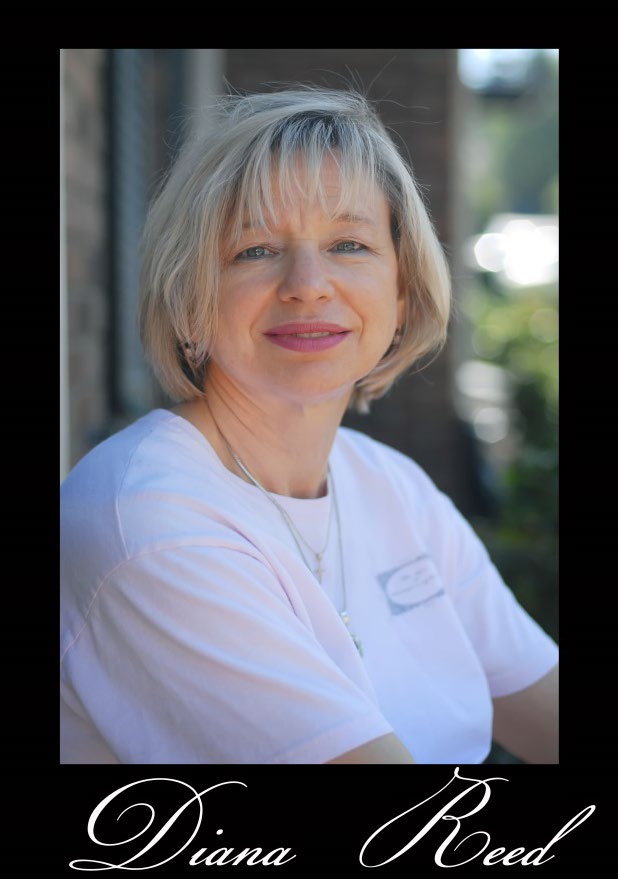
The Tennessean…Obituary by Sandra Collins
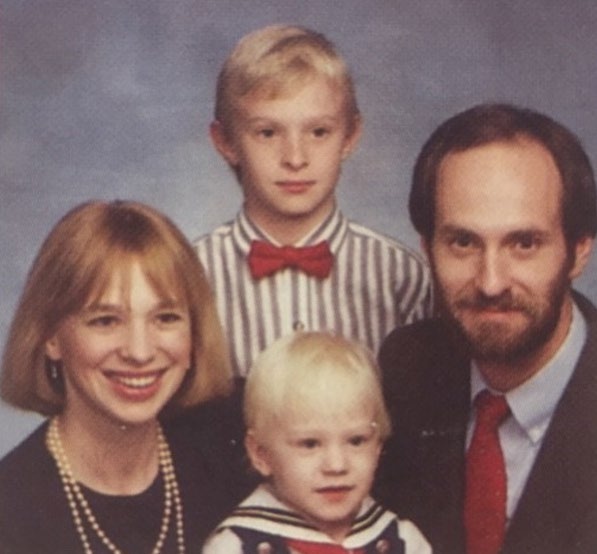
Diana Reed is survived by her husband, Wayne A. Reed, and sons Erik and Kevin Reed; stepmother Carol Pike Bergeson, brother Bob Bergeson, and nieces Laura Bergeson Penn (Chris) and Samantha Lynn Bergeson.
Born in Oak Park, IL, Diana moved to wherever her father was hired to teach architecture. In 1974 she graduated from Christiansburg HS in VA, then attended UVA for two years. She and husband Wayne met in Christiansburg, married in 1976, and moved to Nashville, where she completed a degree in dietetics at Vanderbilt. In 1984, she earned an accounting degree from MTSU to help her husband, a CPA, who had learned he had a form of ALS. Diana also worked part-time at the Otter Creek pre-school and kindergarten, where she found women who became her lifetime friends.
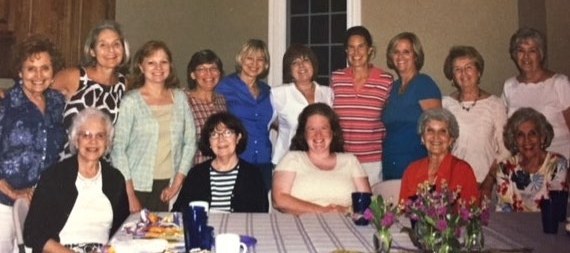
Her stepmother says that like her father, Diana was somewhat “larger than life,” and filled a room with her enthusiastic conversation and laughter. Friends agree. The large book club that met at her house learned quickly that she devoured good books, stopping always to smell the pages. She was thoughtful, insightful, and articulate with a quick, broad smile, and a hearty laugh. She involved herself in Bible studies, making large numbers of friends. A person of deep, unshakeable faith, like an OT prophet, Diana wrestled with God as she watched her husband’s disease progress. Diana and Wayne made the wedding promise “for better or worse” a reality lived before the world in a loving, enviable marriage. Though sometimes beyond exhaustion, she continued to serve her devoted husband tenderly and relentlessly.
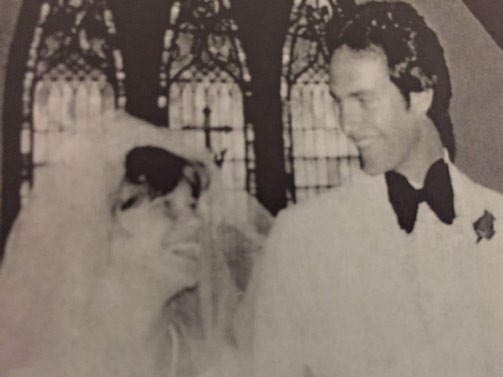
Wayne and Diana had a passion for the poor, understanding the critical need for education and affordable housing. When others would have said, “We have enough on our plate, thank you,” Diana and Wayne led Otter Creek Church in the 1998 creation of the Wayne Reed Christian Childcare Center, a Three-Star-Quality preschool for at-risk children. They worked together as well to find affordable housing for low-income families. As accountants for the preschool, Wayne and Diana knew every family and child by name. Their passion for the poor inspired yet another group of likeminded and devoted friends, who continue the work the Reeds began.
a t W a r d a n d D i a n a
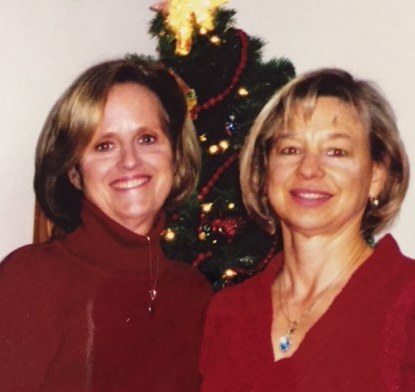

Friends will gather at the Otter Creek Church, 409 Franklin Road, on Sunday, October 7, for visitation from 3-5 and a celebration of Diana’s life at 5:30. In lieu of flowers, the family asks that donations be made to Wayne Reed Christian Childcare Center, 11 b Lindsley Avenue, Nashville, TN 37210.
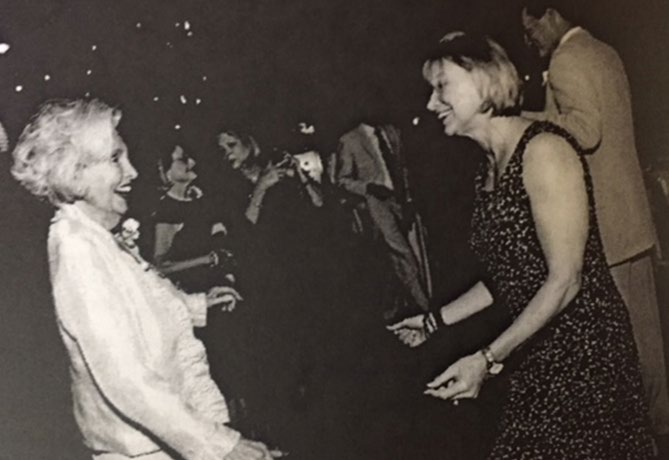
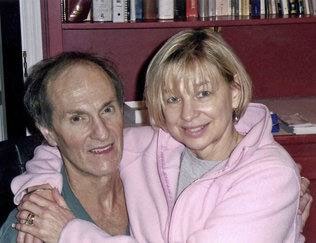
Comments by Pat Ward, pictured on the right
Welcome: Thank you for coming. St. Thomas Hospital was overwhelmed by the outpouring of your love and presence. Your presence today honors Diana, Wayne,
Erik, Kevin, Bob, Carol, other family members and our God. Wayne has clearly stated that he wants today to be a celebration of Diana’s life. So, even as we grieve, are still going to celebrate her and praise our God because we are a people who do not grieve as the world grieves. We grieve with hope because Jesus died and rose again. Please join us as we celebrate.
Today is no easy task. Defining someone like Diana in mere words is impossible. If you have a Bible or any book in front of you and you know what she would do as she opened it, join me in taking a deep breath! Phrases and actions that will sound familiar to you: Kevin, Wayne, Erik, Princes, Easter: shoot and 5/8: As she listened to a speaker, nodding her head: When she was really excited she would go into cheerleader mode: When she hugged you, she squeezed you so tightly you felt as if you couldn’t breathe. She would kiss you on the cheek and say I love you. Whatever Diana felt, she felt intensely.
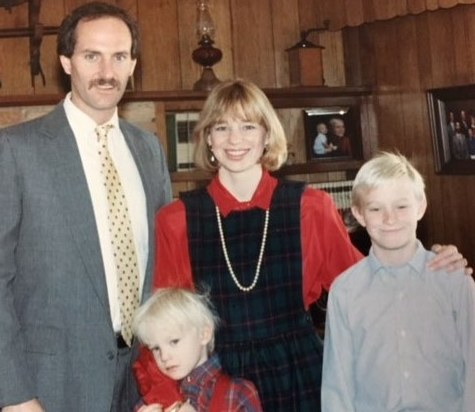
I can’t say Diana without saying Wayne. You have both openly shared that in your early marriage, there were hard days when you didn’t really like one another. So as I look at your today – what a hope, what an example, what an encouragement to others. What a team. What a picture of oneness. You were best friends. She served you physically for years and years. She made you laugh. But she knew what we all know – you were her rock, her stabilizer. You loved her unconditionally. You loved her more than she was able to accept.
Diana would not settle for easy answers. She struggled to understand why. She cried out to God. As I read her journal from even as late as in the hospital, I found Psalm 13. “How long O Lord: Will you forget me forever: How long will you hide your face from me. How long must I wrestle with my thoughts and every day have sorrow in my heart? How long will my enemy triumph over me? Look on me and answer O God. Give light to my eyes or I will sleep in death; My enemy will say I have overcome him and enemies will rejoice when I fall. But I trust in your unfailing love; answer O Lord my God. My heart rejoices in your salvation. I will sing to the Lord for he has been good to me.” There were times when Diana was intensely mad and times when she was grieved in her spirit. Daily she cried out to God for relief, rest, respite. She struggled and wrestled with God. She felt her own pain so deeply, she had the gift of feeling ours.
Diana was an avid reader. She loved books, going to the moves, and music. Even in the ICU she was asking for her IPOD. She and Wayne enjoyed their times together. They would sit on the porch and read; they spent time in the pool so Wayne could exercise; they worked puzzles together. They worked side by side in the same office. To be able to go to work or church it would take 2 hours or more to get ready. I would ask myself how they did this and realized God was their strength. Diana loved Mother Teresa and took comfort in the fact that even Mother Teresa had her doubts. Mother Teresa said that suffering pain, sorrow, humiliation, feelings of loneliness are nothing but the kiss of Jesus, a sign that you have come so close he can kiss you
Diana’s heart broke for the things that break God’s heart…suffering and injustice. She loved the Wayne Reed Center, Encouragement Ministries and Open Table. She cared not only for those she knew who suffered but for the faceless. She would tell Josh he had a good sermon, but also ask him what difference we were making Monday through Saturday.
Diana nor Wayne want our pity. They are the Jobs of our day. So for all of us, what are we to do with our loss and grief? We must agree today that tragedy will not be the only thing that gets our attention and draw us closer
together. We will not let it define what is important. The things that fill our time will not only be Facebook or Pinterest or TV. It will be the things of another world. We will continue to do what we have done the last week. What a beautiful tapestry has been woven over the last 2 weeks for the world to glimpse God. We didn’t make sense to the people in the hospital. We seemed odd. We were Aarons and Hurs not only for Wayne and Diana, but for each other. People drove Wayne to the hospital and made sure Diana was never alone. People fixed food for the people who drove Wayne to the hospital and those sitting with her. Diana wanted community as much as anyone. The next time you catch yourself saying you feel sorry for someone…instead call or write a note. Stop saying “I’ll meet you for lunch,” and do it. Before you leave here today tell someone you love them or how they have impacted your life…and in the weeks to come to honor Diana, don’t stop.
Diana my friend, I grieve for your family and friends. I grieve for myself but I am so happy for you. Jesus said come to me all of you who are weary and heavy laden and I will give you rest. You are at peace and rest and we will see each other soon.
Newspaper article by journalist Gary Reed, brother of Wayne Reed
“When a loved one becomes the story”
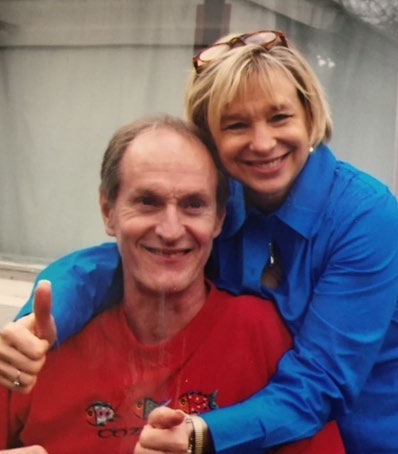
Wayne and Diana Reed, residents of Nashville, were married for 36
years before she died in the nationwide outbreak of fungal meningitis,
contracted from a tainted steroid used for back pain.
My brother maneuvers his electric wheelchair to the edge of his wife's
hospice bed, takes her hand, struggles to lean forward and lays his
forehead on her hand. He sobs loudly. A dozen of Wayne and Diana's
close friends and family fall silent. I lose it, and tears flow. When
watching someone close to you die, emotions run the gamut. Crying,
laughing, praying, joking.
We're told it won't be much longer, but time passes. We tell stories of
Diana's life, her antics. Laughs fill the room. Someone urges her to let go; it's OK, let go. At the foot of the bed, her
stepmother prays. After looking out the window at a blue sky with few clouds, a friend tells Diana it's a beautiful day
to fly. More time passes, more stories recounted. We laugh and then are silent.
As an editor at The Sacramento Bee and other newspapers, I've helped reporters write stories about high-profile family
tragedies. This month, my family became one of those narratives. After suffering a stroke that left her in a coma for a
week, my sister-in-law Diana died from a rare form of fungal meningitis caused by a tainted epidural steroid injection
she received at a Nashville pain clinic.
Diana was one of the first of 25 people to die in a nationwide meningitis outbreak that has so far sickened more than
330 and scared 14,000 who received the shots in 18 states.
When I flew to Nashville four weeks ago, I had no idea my family would be cast into the forefront of this breaking
national news story – one that would bring reporters to Wayne's front door, television cameras outside
Diana's memorial service, and interview requests from the New York Times, the Wall Street Journal, CNN, NBC
News, the local Nashville media and others.
I got on a plane after being told Diana wasn't expected to live
but a day or two. She had been in the hospital for what doctors
said was either viral or bacterial meningitis and was expected
to go home in a few days. The news that she had 24 to 48 hours
to live was hard to comprehend. How could that be? Diana was
healthy, so full of life and energy. What would happen to
Wayne, who has been in a wheelchair for the past six years?
Diana was his primary caregiver.
For nearly two weeks, friends took turns sitting at Diana's bedside every day, every night – people who for years have
been part of an incredible support group for Diana and for Wayne, my older brother, who has lived for more than 20
years with a rare form of Lou Gehrig's disease, the same kind that afflicts physicist and author Stephen Hawking.
For me it became a surreal two weeks, juggling grief and the loss of my sister-in-law with the national media attention.
I had the urge to talk with reporters but also to preserve the privacy of family and close friends when they were most
vulnerable. It was the most emotional and heartbreaking two weeks I have ever experienced. But I also wanted to get
the story out.
The day after Diana died, one of her friends posted a blog item and her death was mentioned on a Facebook page.
With that public acknowledgment, a face was given to the story of the meningitis outbreak, and the media came
calling.
While trying to find quiet moments to grieve, friends and family looked to me for help on how to deal with the media
attention. I was sitting outside, alone, when someone rushed up and said a TV crew was knocking on the front door.
"Would you go talk to them?"
It was too early to talk publicly. Diana's brother Bob and I told them to give the family a little time. We would be
willing to talk after the memorial service. After dealing with the television crew, someone handed me a piece of paper
with the name and phone number of a reporter from the Associated Press, who had come to the side door. Each day,
more and more requests for interviews came. They would have to wait.
Newspaper and television stories were cobbled together quickly from interviews with friends and associates over the
next few days. We watched the TV news as photos of Diana and Wayne filled the screen. I watched Wayne as he
listened and saw the sadness in his face. I touched his shoulder; I cried some more. We all did.
Some early news reports were not quite accurate. While talking with the pathologists who would perform the autopsy,
they complained that the media weren't getting the facts straight. Family and friends who gathered around the TV
news at night said the same thing.
I tried to explain that it was a breaking story and reporters were trying to piece it together. The reporters were getting
the big picture correct, but they were missing some nuances. I wanted the media to get it right, precisely right. So, a
couple of attorneys and I went on background with a local newspaper reporter to clear up a few details about whether
Diana was positively diagnosed with fungal meningitis and how doctors said they were making that determination.
News of the outbreak continued to unfold. More deaths were linked to fungal meningitis. The pain clinic in Nashville
closed. The Centers for Disease Control and Prevention took over the medical investigation. A federal criminal
investigation was launched. The tainted epidurals were traced to a compounding pharmacy in Massachusetts that has
been shut down and found to have had shoddy sterilization practices.
That's the news, but it's the people in the news who bring a story home. In this case it was too close to home – for
people in Nashville; in Chicago and New York, where many of Diana's relatives live; and in Virginia, where Wayne
and I grew up.
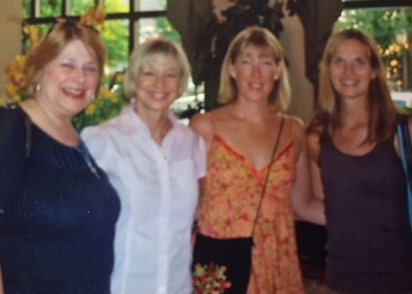
Diana and Wayne touched the lives of many people,
through friends, through their two sons, through church
and through an inner-city center for at-risk children in
Nashville that bears Wayne's name. About 1,000 people
attended the memorial service for Diana. For two hours, I
met many of them in a reception line wanting to express
their sorrow. Minutes before the service began, the line
still stretched up the aisle of the church, out the doors and
down the hallway.
Days after the memorial service, Bob and I walked their dog, Sherman, up a hill to a nearby observatory, the route
Diana always took. Wanting to get a look at the telescope inside, I checked to see if the door was open; it was locked.
A man appeared and said the
observatory was closed. As
we walked away, a woman
rushed out the door and
wanted to talk.
With tears in her eyes she
spoke of seeing Diana daily,
walking Sherman, a beagle-
hound mix. When she saw
Bob and me walking Sherman the week before, she thought something had happened to Wayne and was shocked to
learn later that it was Diana who had died. She invited us in for a personal tour, Sherman included.
During my time in Nashville I was continuously
amazed and spiritually inspired by the outpouring of
goodwill, friendship and love shown for Wayne and
Diana. People streamed through the hospital to visit
Diana. More people lingered in the waiting room
downstairs. At their home, the scene was similar.
People we didn't know left food in the refrigerator in
their garage. Others stopped by to talk, to offer
condolences and hugs.
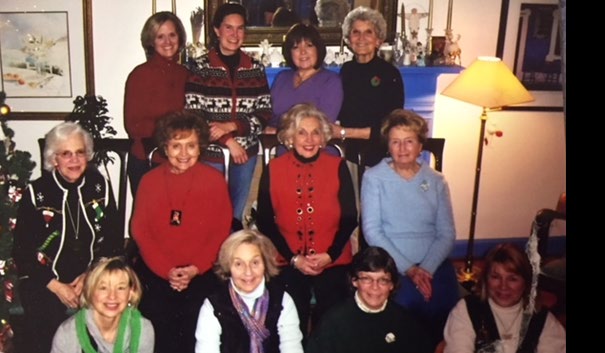
A core group of friends from the Otter Creek Church of Christ in Brentwood, Tenn., helped Diana and Wayne over
the years as he was weakened by amyotrophic lateral sclerosis. Not only was Diana his caretaker who also helped him
with work, she was the voice of his business as he sometimes struggled to talk. When she needed a break, a friend was
always there for her: Pat, Russ, Jeff, Jerry, Tony, Marlene, Matt, Ashley, Jennifer and others. For many years, I couldn't
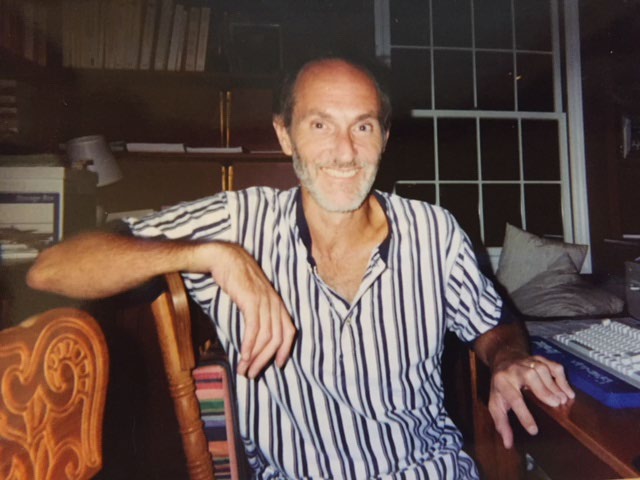
imagine how Wayne coped with such a debilitating
disease. He liked to play basketball and softball, and we
were very competitive. But I never heard him complain
about how unfair life can be. I didn't know where he found
the inner strength or the faith until I witnessed the support
from his friends over those few weeks. I should be so
lucky.
Wayne's view of life was simply stated in an interview with a New York Times reporter a week after Diana's death.
"I am blessed," he said.
A Handout for the Funeral by Sandra Collins
Because I am uncomfortable (a Gail Srygley word I have adopted) with lifting verses from the Bible to support an
opinion or bring comfort to another, I prefer to read Scripture in context and let the page illuminate my situation or
the situation of those around me.
This past week, as Diana was dying, I was to teach I Corinthians 11-12 to Otter Creek ladies: Paul’s description of the
body of Christ. The problems the Corinthians were having resulted from their lack of understanding that they were to
be the body of Christ on earth. To his dismay, they were dividing over who had greater knowledge, going to court,
thinking immorality would not infect the body, dividing by financial status in the practice of the Lord’s Supper. Paul’s
argument focuses on the unity of the human/metaphorical body and then moves on to the great love chapter. If one
part hurts, the whole body hurts, he tells them.
I had to teach these verses to women whose hearts were aching for the Reeds, whose hands had prepared and delivered,
whose voices in Bible studies and book clubs and phone conversations had offered comfort and support, whose ears
had heard her anguish and questions. These were also those who said, “Why couldn’t it have been me?” Among the
entire body of Christ both at Otter Creek and elsewhere, people had searched for appropriate autos and lifts, repaired
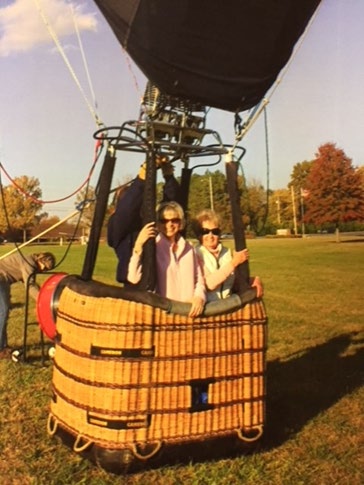
household problems, remodeled bathroom showers, mowed grass,
cleaned the house, taken the Reeds or Diana to special events (U2
concert, a hot-air balloon ride) and made sure she and Wayne could
make the trip to Florida safely on their own. Then those hands at the
condo—who knew?—who took care of the lift that wouldn’t loosen and
insured that Diana and Wayne were comfortable and secure. The list
goes on. The body of Christ united to ease the suffering of parts of its
body.
The next day I had to teach Mark 8 to Brentwood Hills women, not an
easy chapter to teach in our comfortable times where we have never
seen traitors humiliated and left to die on Roman roads we passed by.
People who knew about such horrors and had themselves been
persecuted were being asked to deny themselves and take up their own
crosses and follow him. How do we talk about cross bearing? “Well, that is just another cross I have to bear” is
trivialized in our day. Jesus was not talking about aches and pains or even illnesses like Wayne’s. Jesus was talking
about deliberately taking on the suffering of others. And how could I find such an example?
Wayne and Diana, of course, looked beyond their own problems to the suffering of others. After the devasting news
that Wayne had a form of ALS and lost his executive position in a bank during a merger in the 80s, Wayne and Diana
began to take on the plight of the poor. Wayne, and sometimes the whole family, would come to YES tutoring week
after week. Because the bus would pick up whoever was at the bus stop in the Napier area, we would usually get as
many as twenty preschoolers. At first Joyce Rucker worked with them. Then Wayne said he would take them on,
buying crayons, puzzles, paper, and preschool workbooks and sitting on the floor as children crawled all over him.
At work, they tried to find affordable housing for other low-income families.
In the early 90s, the idea of early intervention began to grow among those who came to tutor. Substituting for Wayne
one Thursday evening, Gail Srygley said, “You could make the biggest difference with these little preschoolers. It
will be harder to impact these older kids.” The
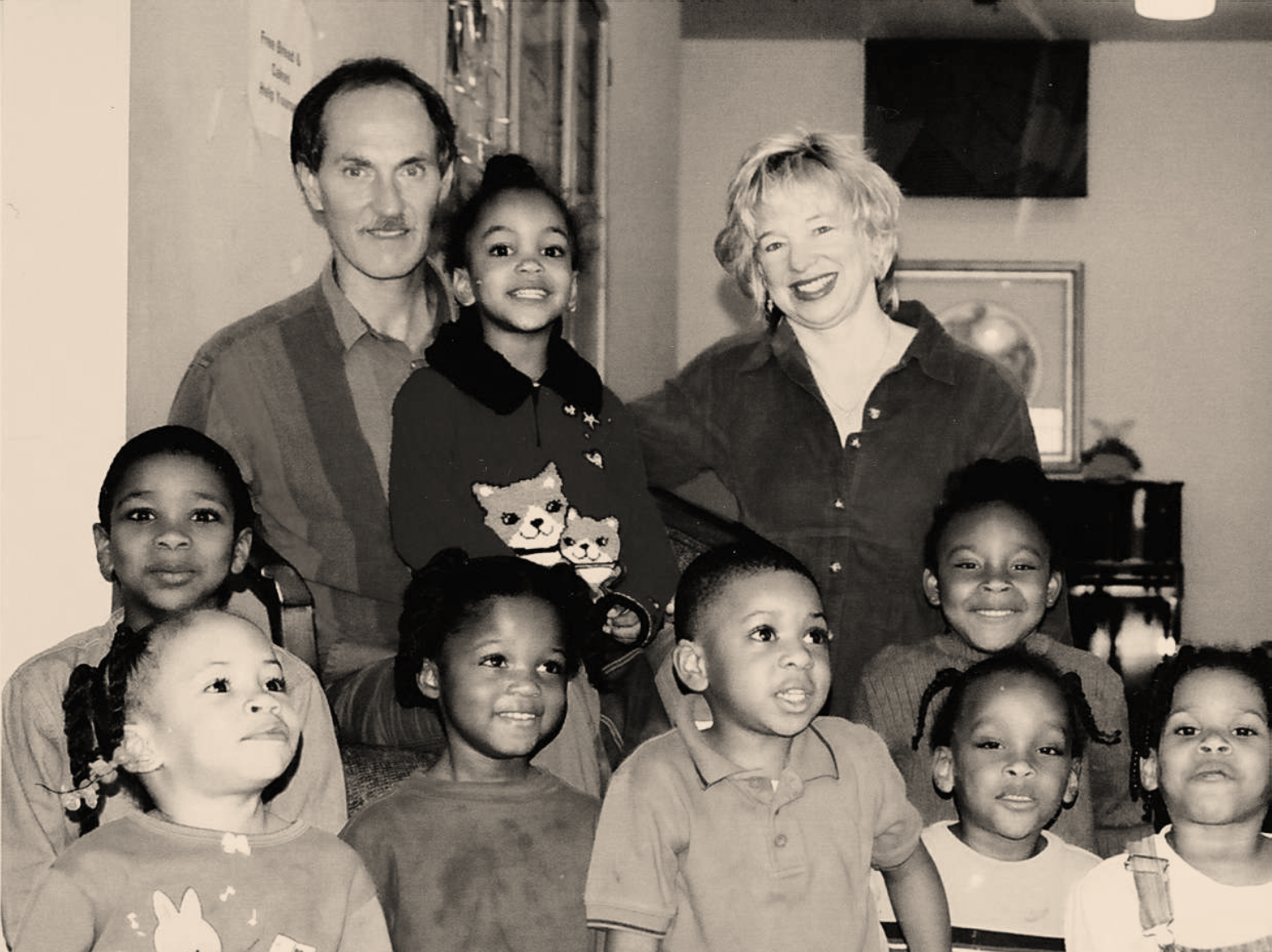
rest is history. The Wayne Reed Christian
Childcare Center was created and opened debt-
free in 1998 to serve at-risk children and bring
hope to their low-income families. Diana and
Wayne attracted a cadre of like-minded people
who got it done and continue to work beside
Wayne in the ministry begun more than fifteen
years ago.
This is the message of Mark 8: a deliberate
choice to take on the sufferings of others
despite our own sufferings.
This year the them of the annual fundraiser was picked months ago after a Tokens show when Odessa Settles say,
“Keep Your Eyes on the Prize. Hold On!” I asked her to sing it at this year’s dinner, where the word for all of us
listening will be heartrending. On the day after Diana
died, I was headed to the Center to read. I usually avoid
Edgehill because I so often encounter a long train. For
some reason, I forgot to take a different street, and a train
had stalled with only three cars to drag past the
intersection. Directly in front of me was a blue Ford
pickup. When I read his license plate, I got out of the car
and hurried to the driver to thank him. The license plate
read “Hold On.”